


Views: 0 Author: Site Editor Publish Time: 2026-07-31 Origin: Site


Stainless steel stands as the absolute industry standard in professional kitchens worldwide. Yet, navigating the modern consumer market often requires you to parse misleading marketing jargon. Brands constantly push obscure layers and complex metal grades to justify much higher prices. A poorly constructed Stainless Steel Pot almost guarantees scorched sauces during delicate cooking. It causes uneven boiling dynamics. It eventually leads to severe base warping over time. Your ultimate kitchen goal involves finding lifetime-durability cookware. This gear must perfectly suit your specific culinary output and unique stovetop type. This comprehensive guide provides an objective, technical breakdown of cookware construction. We teach you how to properly evaluate metallurgy, physical structures, and ergonomic designs. You will learn exactly how to choose a high-performing cooking vessel. It will reliably deliver professional-grade thermal control without severely overspending on unnecessary, gimmick-driven features.
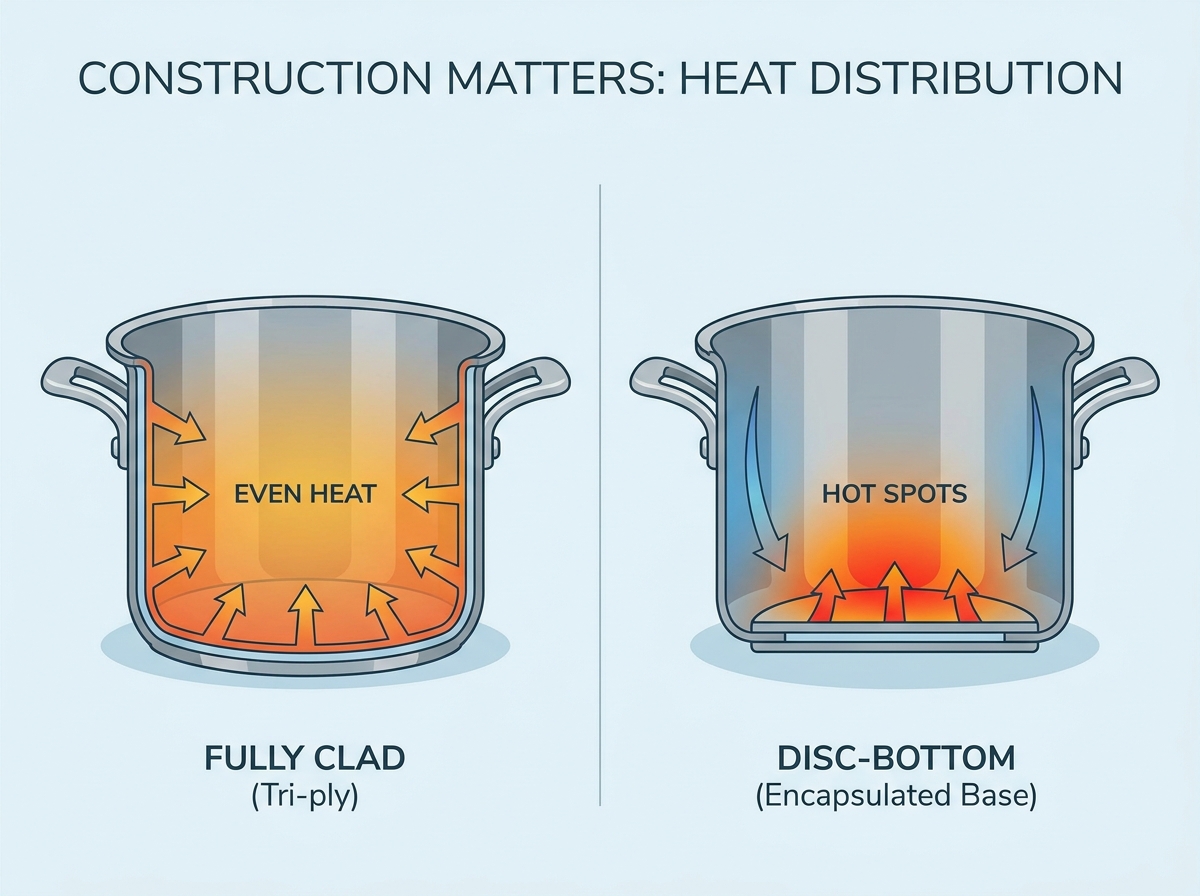
Construction Over Brand: "Fully clad" (multi-ply throughout the body) drastically outperforms "disc-bottom" (encapsulated base) in thermal conductivity and preventing scorching.
The Metallurgy Standard: Always look for 18/10 stainless steel for the cooking surface to ensure high corrosion resistance and flavor neutrality.
Size to Function: A small stainless steel pot (1.5–2 qt) is essential for rapid, precise temperature changes, while a large stainless steel pot (8+ qt) demands thicker cladding to manage the weight and volume of batch cooking.
The Layer Myth: 5-ply or 7-ply is not inherently better than high-quality 3-ply (tri-ply); core material thickness matters more than layer count.
Cookware performance begins entirely out of sight. You cannot judge a pan simply by examining its shiny exterior finish. We must deeply evaluate the internal metallic structure. This helps us understand underlying thermal dynamics. Different building methods dictate how heat moves from your burner directly to your food.
We view cladding as the ultimate solution for precise heat control. Fully clad implies the internal core extends completely up the sidewalls. This tri-ply or 5-ply construction remains absolutely essential for serious cooks. It ensures rapid temperature consistency across the entire cooking surface. This active design effectively prevents side-scorching when you reduce delicate cream sauces. Conversely, disc-bottom or encapsulated pans limit the core material strictly to the flat base. They offer a highly cost-effective alternative for simple water boiling. However, they remain highly prone to intense, localized hot spots near the base perimeter. Food burns easily exactly where the internal disc ends.
Industry standard guidelines dictate specific steel alloys for distinct kitchen purposes.
18/10 (304 Grade): This premium alloy contains 18% chromium and 10% nickel. We consider this the absolute gold standard for interior cooking surfaces. It remains highly resistant to corrosive, acidic foods like crushed tomatoes. It will never leach harsh metallic flavors into your delicate meals.
18/0 (400 Series): This specific alloy removes the nickel element entirely. It becomes highly magnetic as a direct result. Manufacturers require it specifically on the very bottom exterior layer. It ensures seamless, efficient compatibility with modern magnetic induction stovetops.
Stainless steel conducts thermal energy quite poorly on its own. It desperately needs a highly conductive inner core to perform well.
Aluminum: This metal offers excellent, rapid heat distribution overall. It stays relatively lightweight during heavy use. You will find it serves as the standard core in most high-end cookware lines today.
Copper: This element delivers dramatically superior responsiveness to burner adjustments. It reacts almost instantly to sudden heat changes. However, it feels exceptionally heavy in hand. It also commands an incredibly steep premium price point.
Cookware sizing directly impacts your daily culinary success. You cannot treat all volume capacities interchangeably. Each specific volume serves a highly focused kitchen purpose. We evaluate different pots based on how they handle varying ingredient loads. Choosing the wrong size often ruins temperature-sensitive recipes.
You absolutely need a highly reliable Small stainless steel pot for everyday prep tasks. We use these extensively for wine reductions, egg emulsions, pastry creams, and melting butter. Your evaluation criteria should focus heavily on internal geometry. It requires steep, tall sidewalls to actively minimize unwanted liquid evaporation. A highly responsive inner core remains mandatory here. Fast temperature adjustments actively prevent delicate dairy sauces from splitting unexpectedly.
We widely consider this the most versatile size available today. Ideal use cases include boiling dried pasta for two people. You will use it constantly for blanching green vegetables. It works perfectly for reheating dense, creamy soups. Your primary evaluation criterion involves everyday ergonomics. It strictly needs a perfectly balanced weight-to-capacity ratio. You must lift and pour hot liquids from it easily using just one hand.
Serious batch cooking requires intensive volume management. A durable Large stainless steel pot handles complex bone stocks effortlessly. It manages large-batch pasta boils without overflowing. We use these massive vessels primarily for home canning. They simmer heavy, thick chili perfectly. Evaluation criteria shift heavily toward sheer structural integrity. It demands robust, permanently riveted handles. These handles must support over 15 pounds of violently boiling liquid safely. You also need a noticeably wide base. This ensures maximum physical contact with wide gas burners. A tightly fitted lid securely traps essential heat during all-day simmers.
Pot Capacity | Ideal Culinary Uses | Key Evaluation Focus | Core Requirement |
|---|---|---|---|
1.5 to 3 Quarts | Reductions, emulsions, melting butter | Steep sidewalls to prevent evaporation | Highly responsive (fully clad) |
4 to 6 Quarts | Pasta for two, vegetable blanching | Balanced weight-to-capacity ratio | Even heating (fully clad preferred) |
8 to 12+ Quarts | Bone stocks, home canning, large stews | Wide base, structural handle integrity | Thick base (disc-bottom acceptable) |
Professional chefs prioritize structural durability over mere aesthetic appeal. Hardware designs dictate exactly how a pot feels during intense dinner rushes. You should evaluate handles, rims, and lids very carefully before buying anything. Minor design flaws become major frustrations during daily cooking.
The age-old debate between riveted and welded handle attachments continues constantly.
Riveted Handles: Rivets offer genuine, verifiable lifetime durability under heavy physical stress. We consider them the absolute industry standard in commercial settings. They will rarely detach safely.
Welded Handles: Welded attachments look much cleaner inside the pan interior. They are undeniably easier to scrub clean after messy meals. However, they carry a significantly higher catastrophic failure risk over decades of continuous use.
Thermal bridging also matters immensely for user safety. Look closely for split-handle metal designs. These feature a distinct, open V-shape exactly where they meet the hot pan body. This smart geometric gap disperses thermal energy effectively. It keeps the main gripping handle safely cooler on a blazing stovetop.
Rims heavily influence daily kitchen safety and overall cleanliness. Flared or rolled exterior rims prevent hot liquids from running down the sides. This simple curve prevents dangerous, slippery messes during rapid pouring. Straight, unrolled rims cost manufacturers much less to produce. However, they almost always cause frustrating, messy dripping onto your clean counters.
Lids trap internal heat and preserve food moisture dynamically.
Stainless Steel Lids: These covers remain completely indestructible. You can safely place them inside blistering hot ovens without worry. They survive drops onto hard tile floors easily.
Tempered Glass Lids: Glass allows highly convenient visual monitoring of bubbling liquids. Unfortunately, glass remains highly prone to unexpected thermal shattering. It often traps gross food debris tightly in its metal rim seams. Glass covers also typically restrict you to much lower oven baking temperatures.
Finding the absolute Best stainless steel pot requires honest personal budget assessment. You must cleverly balance actual kitchen habits against expected hardware costs. We categorize the current consumer market into three highly distinct quality tiers. Understanding these tiers prevents you from overpaying for useless marketing hype.
You generally get basic disc-bottom construction down here. The overall metal gauge feels noticeably thinner and lighter. Handles often use cheaper stamped metal instead of solid cast steel. We find these starter options completely acceptable for basic water boiling. You can use them quite safely as dedicated soup stockpots. However, they remain highly risky for delicate culinary tasks. They will likely burn your thick tomato sauces entirely.
You receive premium fully clad 3-ply construction at this tier. This usually features a solid, thick aluminum core layer. The interior utilizes highly durable 18/10 grade steel. You get carefully engineered, securely riveted ergonomic handles. This specific tier routinely offers ninety percent of premium brand performance. You pay a mere fraction of the high-end retail cost. We consider this the absolute smartest choice for the vast majority of home chefs. It delivers incredible long-term value without compromise.
Expect massive 5-ply construction or dense, heavy copper cores here. You get proprietary, highly engineered ergonomic handle designs. Manufacturers employ incredibly strict factory production tolerances. They typically offer comprehensive, no-questions-asked lifetime warranties. We strongly believe this tier justifies the high initial investment for heavy daily users. It perfectly suits passionate cooks who deeply value precise micro-adjustments in burner heat control. It holds excellent long-term monetary asset value in your kitchen arsenal.
Purchasing great cookware simply represents the first step. It still requires proper daily user technique. You must adapt your old cooking habits to suit the bare metal. Stainless behaves very differently from chemically coated synthetic non-stick surfaces. Learning these methods unlocks the true potential of your investment.
You can actually achieve a naturally non-stick surface quite easily. We rely heavily on the scientific Leidenfrost effect. Heat your empty pan entirely dry over medium heat first. Drop a tiny bead of tap water inside it. If the droplet dances rapidly and glides seamlessly, the metal is ready. Add your cooking oil and begin searing your proteins immediately. They will release perfectly without tearing.
Preheating abruptly over maximum high heat damages the metal structure. It can permanently warp the pan base through severe thermal shock. Always preheat patiently on a medium stovetop setting instead.
Even the finest steel requires routine cosmetic maintenance.
Rainbow stains (heat tint): This colorful swirl looks alarming but remains completely harmless. It results directly from natural chromium oxidation under heat. You can remove it instantly with lightly diluted white vinegar.
White pitting: Adding coarse salt to freezing cold water causes tiny permanent craters. The undissolved salt chemically corrodes the smooth metal base. You must always add your salt directly to actively boiling water.
Burnt-on polymer: Polymerized cooking oil leaves stubborn, sticky brown residue behind. It requires a gentle, mild abrasive powder to remove safely. We highly recommend using mild oxalic acid cleaners like Bar Keepers Friend. You should strictly avoid harsh steel wool pads on highly polished mirror finishes.
Do not rush out to buy massive, matching cookware sets immediately. Building your personal collection piecemeal proves much smarter overall. You should base your ongoing purchases strictly on your actual daily cooking habits. Large matching sets often include useless sizes you will never actually touch.
Start by thoroughly auditing your current cookware inventory today. Identify the single pan size you reach for most frequently during dinner prep. It likely resembles a standard 3-quart or 4-quart saucepan. Upgrade this primary daily workhorse to a fully clad, tri-ply model first. You will instantly notice the dramatic performance difference. Once comfortable with the thermal dynamics, strategically invest in larger specialty sizes.
A: Not inherently. The total thickness of the internal conductive core matters far more than the simple number of layers. A high-quality 3-ply pan utilizing a thick aluminum core often heavily outperforms a painfully thin 5-ply pan. Focus entirely on overall metal thickness and core material quality rather than flashy marketing layer counts.
A: This harmless visual phenomenon is called heat tint. It occurs naturally when the protective chromium layer on the steel oxidizes slightly under high stovetop heat. It does not affect underlying cooking performance or food safety at all. You can easily wipe it away using a splash of white vinegar or a mild acidic cleaner.
A: It depends heavily on its primary intended use. If you only use large stockpots for boiling water or simple thin broths, a basic disc-bottom design works perfectly and saves significant money. However, if you regularly simmer thick purees or hearty chilis, you absolutely need fully clad walls to prevent severe side-scorching.
A: Yes, but only if the specific manufacturer uses the correct exterior alloy layer. Induction stovetops require magnetic metals to function properly. High-end cookware brands utilize nickel-free 18/0 stainless steel for the outermost base layer to guarantee induction compatibility. Always check for an official induction-ready coil symbol on the base before purchasing.