


Views: 0 Author: Site Editor Publish Time: 2026-07-04 Origin: Site


Many first-time kitchen outfitters fall into a common trap: purchasing massive, 14-piece cookware sets filled with redundant pots and tiny pans they never use. This high failure rate in initial cookware purchases stems from prioritizing quantity over functional quality. Beginners often lack a reliable framework to evaluate heat distribution, material longevity, and stovetop compatibility. Without this knowledge, you end up with warped pans, ruined non-stick coatings, and frustratingly inconsistent cooking results.
This guide provides a practical, evidence-based framework for evaluating Stripes Cookware. Instead of relying on marketing claims, we focus on matching specific materials and pan shapes to your actual daily cooking habits. You will learn how to select the exact pieces necessary to build a highly functional kitchen foundation that performs reliably meal after meal.
Understanding how a pan handles heat is the first step in choosing reliable kitchen equipment. Heat conductivity refers to how fast a pan heats up and responds to temperature changes from the burner. Heat retention measures how well the pan holds its temperature when cold ingredients are added. The core construction of your pans heavily dictates these behaviors. Aluminum cores heat up rapidly and offer excellent control, while copper cores provide even faster response times for precision cooking.
When evaluating construction, the choice between fully clad and disc-bottom designs dictates performance. Fully clad, or multi-ply, construction features heat-conductive core materials sandwiched between layers of stainless steel throughout the entire pan, including the walls. This uniform heating prevents scorched edges and uneven cooking. In contrast, encapsulated disc-bottom pans only have the conductive material at the base. This cheaper construction method often leads to severe hot spots, uneven searing, and sauces that scorch around the bottom edges of the pot. If you are simmering a delicate tomato sauce, a disc-bottom pan will likely burn the edges where the conductive plate ends.
Weight management plays a significant role in daily kitchen usability. Heavier pans generally retain heat better and resist warping, making them excellent for searing thick cuts of meat. However, excessive weight causes wrist strain during continuous tossing, stirring, or pouring. Finding a balance between thermal mass and physical maneuverability ensures a comfortable cooking experience.
Handle ergonomics directly impact your control over the pan. Stay-cool hollow stainless steel handles dissipate heat effectively on the stovetop. Silicone-wrapped handles offer a secure, comfortable grip but lower the pan's maximum oven-safe temperature. For heavy or large-capacity vessels, cast helper handles are indispensable, allowing you to lift a fully loaded pan safely with two hands. Riveted handles provide maximum structural durability but tend to collect food residue around the interior rivet heads. Welded or rivet-free interiors offer a smooth surface that is easier to clean and maintain hygienically, though they may lack the absolute sheer strength of heavy-duty rivets.
The anatomy of a pan's rim determines how cleanly you can transfer liquids. Flared rims are essential for drip-free pouring. They guide sauces and hot oils smoothly out of the pan, preventing messy spills down the exterior walls and reducing the risk of burns. Straight rims often cause liquids to dribble, making plating and storage more difficult.
Lid selection also influences your cooking workflow. Tempered glass lids are ideal for beginners. They allow you to monitor simmering liquids and cooking progress visually without lifting the lid and releasing trapped heat and moisture. Stainless steel lids are virtually unbreakable. They offer superior heat retention and can withstand significantly higher oven temperatures, making them better suited for braising and heavy-duty oven use.
Realistic expectations regarding cookware lifespans depend entirely on the materials you choose. Clad stainless steel represents a true lifetime investment. It withstands metal utensils, high heat, and rigorous scrubbing. Conversely, PTFE and ceramic non-stick coatings have an inherently limited lifecycle. Even with meticulous care, the non-stick properties degrade over time.
When calculating cost-per-use over a five-year period, stainless steel often emerges as the more economical choice despite a higher initial purchase price. A non-stick pan may require replacement two or three times within that same window, compounding the overall expense. Understanding this trade-off helps you allocate your budget toward materials that align with your long-term kitchen goals.
The skillet is the most frequently used tool in any kitchen. Its primary use cases include searing proteins, sautéing vegetables, and cooking eggs. For most beginners, a 10-inch or 12-inch skillet provides the optimal balance of surface area and burner compatibility. A 10-inch pan handles meals for one or two people efficiently, while a 12-inch pan accommodates larger batch cooking without crowding the ingredients.
A sloped-sided design is necessary for this piece. The angled walls allow for easy tossing of ingredients and promote rapid evaporation, which is critical for achieving a proper sear rather than steaming your food. If you opt for a 12-inch or larger skillet, ensure it includes a helper handle. The combined weight of a large metal pan and a family-sized portion of food requires two-handed lifting for safety.
A reliable saucepan handles tasks involving liquids. You will use it constantly for reducing sauces, boiling grains, cooking pasta portions, and reheating soups. A standard 2-to-3-quart capacity serves as the most versatile starting point, offering enough volume for daily tasks without being unwieldy.
When selecting a saucepan, prioritize a tight-fitting lid to trap steam efficiently. Interior measurement markings add significant convenience, allowing you to add liquids directly without dirtying separate measuring cups. Ergonomic, stay-cool handles are particularly important here, as you will frequently pour hot liquids directly from the pot.
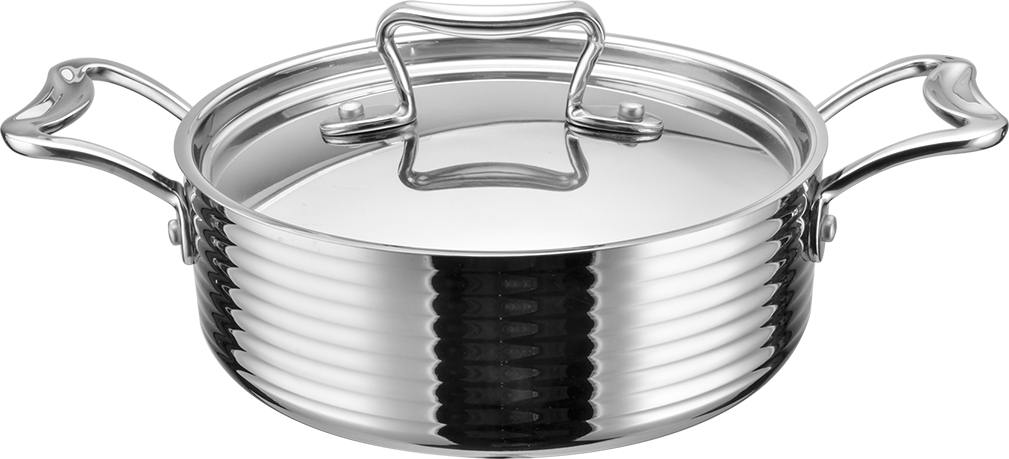
For high-volume tasks, a heavy-duty stockpot or Dutch oven is required. These large vessels are designed for batch cooking, simmering soups, slow-cooking stews, and boiling large quantities of pasta. A capacity in the 6-to-8-quart range accommodates standard beginner meal prep and recipe yields perfectly.
Weight considerations are paramount for these pieces. When fully loaded with water or dense stews, an 8-quart pot becomes incredibly heavy. Wide, secure loop handles are an absolute necessity. They must provide enough clearance to accommodate thick oven mitts, ensuring you can transfer the pot safely from the stove to the sink or oven.
Clad stainless steel is virtually indestructible under normal kitchen conditions. It handles high-heat searing flawlessly and allows for the development of fond—the caramelized browned bits left in the pan that form the base of rich pan sauces. While generally considered dishwasher safe, hand-washing is optimal to maintain the exterior finish.
The primary drawback is the learning curve associated with temperature control. Stainless steel requires proper preheating and adequate cooking fat to prevent food from sticking. It is best suited for searing meats, simmering acidic tomato sauces, and users who are willing to learn proper heat management techniques.
Non-stick surfaces offer effortless food release and require significantly less cooking fat, making them the easiest pans to clean. However, this convenience comes with strict limitations. The coating degrades over time, typically lasting one to three years depending on usage frequency. Non-stick pans cannot be used over high heat and are strictly incompatible with metal utensils, which will scratch and ruin the surface.
Modern PTFE coatings are transitioning to PFOA-free formulations, addressing historical health concerns. Ceramic non-stick offers an alternative, though it generally possesses lower thermal limits and loses its non-stick properties faster than PTFE. These pans are best reserved for delicate tasks like cooking eggs or flaky fish, where immediate cleanup is prioritized over multi-generational longevity.
Cast iron and carbon steel provide superior heat retention, making them unmatched for achieving a hard sear on steaks or deep frying. Once properly seasoned with polymerized oil, they develop a naturally non-stick surface. They are extremely durable and can easily transition from the stovetop directly into a hot oven.
These materials are heavy and require ongoing maintenance. You must keep them seasoned and completely dry to prevent rust. They are also reactive to highly acidic foods, which can strip the seasoning and impart a metallic taste to the dish. They are best for oven-to-table recipes, high-temperature searing, and baking.
| Material | Primary Advantage | Main Limitation | Best Use Cases |
|---|---|---|---|
| Clad Stainless Steel | Extreme durability, handles high heat, builds fond. | Requires proper preheating to prevent sticking. | Searing meats, acidic sauces, deglazing. |
| Non-Stick (PTFE/Ceramic) | Effortless food release, easy cleanup. | Short lifespan, cannot handle high heat. | Eggs, delicate fish, low-fat cooking. |
| Cast Iron | Unmatched heat retention, naturally non-stick once seasoned. | Heavy, requires ongoing seasoning, rusts if wet. | Deep frying, oven-to-table baking, heavy searing. |
Retailers frequently push 10-to-14-piece cookware sets as the ultimate kitchen solution. However, analyzing the actual composition of these sets reveals significant hidden costs. Manufacturers often inflate the piece count by including filler items. This includes tiny skillets too small to cook a single egg, redundant saucepans of nearly identical sizes, cheap plastic utensils, and counting every single lid as an individual piece.
Buying a massive set forces you to compromise on material suitability. A set might provide 12 pieces of non-stick aluminum. While great for eggs, non-stick is terrible for searing a steak. You end up owning a dozen pans, yet still lack the right tool for basic culinary techniques. This approach wastes budget and clutters cabinet space with unused metal.
Building your collection piece-by-piece, known as buying open stock, is the most strategic approach. This method allows you to allocate your budget precisely toward high-quality pieces you will actually use daily. A targeted, hybrid approach maximizes both budget efficiency and kitchen storage space.
A highly functional open-stock roadmap starts with a dedicated non-stick skillet exclusively for eggs and delicate items. Pair this with a high-quality clad stainless steel sauté pan or skillet for searing and making sauces. Finally, add a heavy enameled cast-iron Dutch oven for soups and braises. This curated selection covers 95% of daily cooking tasks without a single redundant piece taking up space in your drawers.
Before investing in new equipment, you must verify stovetop compatibility. Induction cooktops operate via magnetic fields. Therefore, induction-compatible pans must have a magnetic base. You can easily test this by holding a standard refrigerator magnet to the bottom of the pan; if it sticks firmly, it will work on induction. Always check manufacturer specifications to ensure the specific lines you choose meet this requirement.
Gas cooktops require careful flame management. Flames extending beyond the base of the pan waste energy, overheat the handles, and cause permanent exterior scorching and discoloration. For electric or smooth glass-top stoves, pans must have perfectly flat bases. Warped pans will not make full contact with the heating element, resulting in highly inefficient heat transfer. Additionally, rough bases or dragging heavy pots can permanently scratch or crack the glass surface.
Proper maintenance dictates the lifespan of your kitchen tools. Avoiding thermal shock is critical. Placing a screaming hot pan directly under cold water causes rapid, uneven contraction of the metal. This physics reaction permanently warps the pan, ruining its flat base and rendering it useless on glass or induction cooktops. Always allow pans to cool naturally before washing.
Cleaning stubborn stains on stainless steel requires technique rather than brute force. To remove burnt food, deglaze the pan by boiling a small amount of water and scraping the bottom with a wooden spoon. For polymerized oil stains or heat tint, use a specialized, non-abrasive cleaner like Bar Keepers Friend. Apply it with a soft sponge to restore the original finish without scratching the metal.
The most effective setup for a beginner is a curated, minimal collection tailored precisely to your specific heat source and cooking habits. Avoid the temptation of massive, pre-packaged sets that clutter your kitchen with redundant, low-quality pieces. By focusing on core components and understanding how different materials react to heat, you build a foundation that supports culinary growth rather than hindering it.
A: Compatibility depends on the specific product line. Induction cooktops require magnetic materials to generate heat. To verify, check the manufacturer's specifications for an induction compatible label. You can also perform a simple test at home: if a magnet sticks firmly to the flat bottom of the pan, it will work on an induction stove.
A: A non-stick pan typically lasts between one and three years. This lifespan depends heavily on usage frequency and maintenance. To maximize longevity, never use metal utensils, avoid abrasive sponges, and strictly adhere to low or medium heat settings, as high temperatures rapidly degrade the non-stick coating.
A: No. A 12-piece set often includes redundant sizes and filler items like plastic spoons or tiny skillets. A curated 3-to-4 piece open-stock selection—consisting of a skillet, saucepan, and stockpot—is far more practical, saves cabinet space, and allows you to invest in higher-quality materials for the pieces you actually use.
A: Fully clad cookware features heat-conductive layers built throughout the entire pan, ensuring even heat distribution up the sides. Disc-bottom cookware only has conductive material welded to the base. Clad construction matters because it prevents hot spots, eliminates scorched edges, and provides superior temperature control for consistent cooking.
A: You must check the exact temperature ratings for your specific pans. Solid, uncoated stainless steel handles are generally oven-safe up to 500°F or higher. However, pans with silicone-wrapped or plastic handles have much lower thermal thresholds and can melt or degrade if exposed to high oven temperatures.
A: Glass lids are excellent for beginners because they allow you to monitor food without lifting the lid and losing heat. Stainless steel lids are unbreakable, offer better heat retention, and withstand higher oven temperatures. Choose glass for stovetop simmering and stainless steel if you plan to braise frequently in the oven.
A: Never use steel wool. Instead, add water to the pan and bring it to a simmer to soften the burnt residue, then scrape gently with a wooden spoon. For stubborn stains or heat tint, apply a specialized, non-abrasive stainless steel powder cleaner with a soft sponge and rinse thoroughly.