


Views: 0 Author: Site Editor Publish Time: 2026-07-03 Origin: Site


Upgrading kitchen equipment requires precision and a clear understanding of thermal dynamics. Selecting the wrong pots and pans results in uneven heat distribution, premature wear, and daily frustration on the line or at home. While Stripes Cookware offers professional-grade performance, navigating diverse product lines, material compositions, and sizing options often leads to decision paralysis. Buying mismatched sets that fail to align with actual cooking habits or physical comfort wastes space and resources.
This guide provides an evidence-based framework to evaluate pans based on thermal performance, ergonomic realities, physical weight limits, stovetop compatibility, and long-term value. We break down exactly how to match your purchase to your specific culinary requirements. By analyzing burner output, material conductivity, and daily handling constraints, you can build a highly functional kitchen setup without overspending on unnecessary pieces.
Before acquiring new kitchen tools, you must audit your weekly meal rotation. Cooks often buy aspirational equipment rather than practical tools suited for their actual habits. Identify the exact ratio of high-heat searing and deglazing to low-heat simmering you perform weekly. Note how often you execute delicate tasks, like flipping eggs or searing flaky fish, versus liquid-heavy boiling for pasta or stocks. Understanding your culinary baseline helps pinpoint the exact materials you need to succeed.
Assess your recipe volume to determine appropriate sizing. Differentiate between cooking quick solo meals, daily family dinners, and larger-scale batch cooking. A pan that works perfectly for two chicken breasts will fail miserably when crowded with four. Furthermore, determine the frequency of oven-to-stovetop transitions required for your recipes. If you regularly sear thick cuts of meat and finish them in the oven, you need vessels with high heat thresholds and oven-safe handles.
Follow these steps to audit your cooking habits:
Your current heat source dictates your equipment choices. Gas, electric coil, radiant glass, and induction cooktops all transfer heat differently. Gas provides immediate visual feedback and wraps heat around the sides of a pan, making it forgiving with slightly warped bottoms. Radiant glass and electric coils require perfectly flat pan bases for efficient heat transfer. Induction users must verify magnetic base construction when evaluating different product lines. Without a magnetic steel exterior, the pan will not interact with the induction coil and will remain completely cold.
You must follow the burner match rule. Matching pan bottom diameters to physical burner sizes avoids outer-edge cold spots, uneven cooking, and premature warping on high-output burners. Placing a massive 12-inch skillet on a tiny 6-inch burner concentrates intense heat in the center. This causes the metal to expand unevenly, permanently bowing the cooking surface. Conversely, placing a small saucepan on a large gas burner wastes energy and overheats the handle.
| Stovetop Type | Heat Transfer Method | Cookware Requirement | Common Pitfalls |
|---|---|---|---|
| Gas Range | Open flame convection | Handles rapid temperature changes well | Flames wrapping around small pans, burning handles |
| Electric Coil | Direct conduction | Requires perfectly flat heavy bases | Slow response times leading to scorched food |
| Radiant Glass | Infrared and conduction | Flat, smooth bottoms to prevent scratching | Warped pans spinning or heating unevenly |
| Induction | Magnetic friction | Must have a magnetic stainless steel or iron base | Non-magnetic aluminum or copper pans will not work |
Professional-grade cookware carries significant physical weight. You must address the physical constraints of handling multi-ply metal before making a purchase. Analyze the empty weight versus the fully loaded weight. A heavy 5-ply pan offers exceptional heat retention and even distribution, but it becomes a severe liability if you cannot lift it safely when full of hot oil and food. Kitchen injuries frequently occur when cooks underestimate the leverage required to move a loaded pan off a hot burner.
Evaluate daily physical accessibility to prevent wrist fatigue, joint strain, or safety hazards. This is especially relevant for users with physical limitations like arthritis. Look closely at handle design. Consider the angle of leverage, heat dispersion properties, and the absolute necessity of helper handles. Any vessel larger than a 10-inch skillet or a 3-quart saucepan should feature a secondary helper handle. This allows you to distribute the weight evenly across both arms when transferring the pan to the oven or sink.
Clad stainless steel represents the industry standard for high heat retention, even distribution, and durability. By sandwiching a highly conductive aluminum or copper core between layers of durable stainless steel, these pans eliminate hot spots. They handle aggressive cooking techniques beautifully and are optimal for developing deep fond—the caramelized drippings essential for rich pan sauces. Stainless steel is non-reactive, meaning you can simmer highly acidic tomato or wine-based sauces for hours without leaching metallic flavors into your food.
However, clad stainless steel presents a steeper learning curve for temperature control. It requires proper preheating to utilize the Leidenfrost effect. If you add cold protein to a cold stainless pan, the food will bond to the metal on a molecular level. You must heat the dry pan until a drop of water beads up and glides across the surface like mercury. Only then do you add oil and food. This material serves as the workhorse for everyday sautéing, searing meats, and oven finishes.
Nonstick surfaces offer maximum convenience, effortless food release, and rapid cleanup. They are incredibly user-friendly and require minimal fat for cooking. Hard-anodized aluminum bases provide excellent heat conduction, ensuring the pan heats up quickly and evenly. The primary trade-off is a strictly finite lifespan. Regardless of the brand or manufacturing process, the nonstick surface degrades over time through thermal degradation and micro-abrasions.
Nonstick pans have significantly lower heat thresholds than bare metal. Heating them past 500 degrees Fahrenheit can break down the coating and release harmful fumes. Furthermore, the slick surface prevents the formation of fond, making them useless for building pan sauces. Reserve nonstick pans exclusively for cooking eggs, delicate fish fillets, crepes, and low-oil meals. Using them for high-heat searing will quickly ruin the coating and compromise the pan's performance.
Carbon steel and cast iron provide superior thermal mass, high heat tolerance, and natural nonstick properties once properly seasoned. They excel at absorbing heat and holding it, which is exactly what you want when dropping a cold steak into a hot pan. The temperature of the pan will not plummet, ensuring a hard, crusty sear. Carbon steel is lighter and more responsive than cast iron, making it the preferred choice for professional sauté stations and wok cooking.
The downside is that both materials require dedicated, hands-on maintenance. You must build and maintain a layer of polymerized oil—the seasoning—to protect the raw iron from rust and provide food release. This means strict avoidance of dishwashers, immediate drying after hand-washing, and occasional re-seasoning in the oven. They also add significant weight to the cooktop and react poorly to long-simmering acidic foods, which can strip the hard-earned seasoning.
Matching the right material to the specific culinary task prevents ruined meals and damaged equipment. Use this breakdown to guide your daily pan selection:
Choosing the right skillet size prevents overcrowding, which is the most common cause of soggy, steamed food. When food pieces touch or overlap, the moisture they release gets trapped, dropping the pan's temperature and preventing the Maillard reaction. An 8-inch skillet is ideal for solo meals, single-serving eggs, or toasting small batches of whole spices and nuts. It has a small footprint and heats up in seconds.
A 10-inch skillet serves as the standard utility size for one to two servings. It provides enough surface area to sear two chicken breasts or fry a side of potatoes without crowding. A 12-inch skillet is absolutely necessary for family meals serving three to four people. It handles large volumes of food efficiently. However, always note weight requirements and burner size compatibility when moving up to a 12-inch pan. If your largest burner is only 8 inches wide, the outer two inches of the 12-inch skillet will remain cold, leading to uneven cooking.
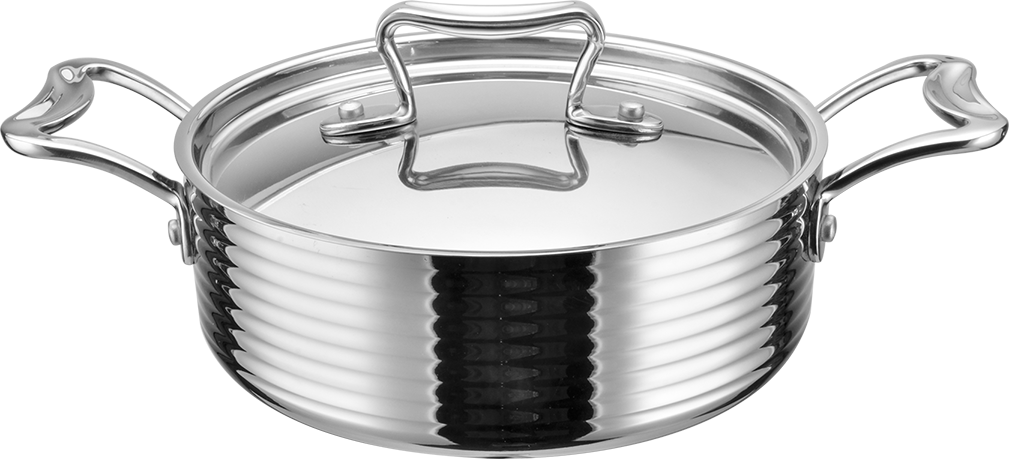
Many cooks confuse saucepans, sauté pans, and skillets. You must differentiate between the sloped sides of a skillet and the straight, high sides of a sauté pan. Sloped sides allow for easy spatula access and wrist-flicking to toss ingredients. Straight sides maximize the flat cooking surface area at the bottom of the pan and reduce splashing when working with liquids. Choose the shape based on your primary cooking methods.
For volume recommendations, a 2-quart saucepan is excellent for cooking grains, reducing sauces, or heating small portions of soup. A 3-to-4-quart sauté pan offers massive versatility. Its wide base allows for shallow frying or searing large batches of meat, while the high straight sides easily contain braising liquids or small stews.
Scale your larger vessels based on your batch cooking habits. A 5-to-6-quart Dutch oven handles standard family roasts, stews, and deep-frying efficiently. The heavy walls provide gentle, even heat from all sides when placed in the oven. For bone broths, large-volume pasta boils, and home canning, invest in an 8-quart or larger stockpot. The tall, narrow shape minimizes evaporation during long simmers and prevents starchy pasta water from boiling over onto your stove.
Retailers heavily promote bundled sets by highlighting the upfront cost savings versus piece-by-piece pricing. Sets often look like a massive bargain on paper. However, you must identify the risk of filler pieces. Manufacturers frequently inflate the piece count of a set by including cheap utensils, tiny 1-quart saucepans, or specialized sizes you will rarely use. If you pay for a 10-piece set but only use four of the pans regularly, you have negated the initial savings and cluttered your cabinets.
A strategic approach involves investing heavily in premium, high-use core pieces while saving money on secondary items. You should allocate the bulk of your budget to a high-end 12-inch clad stainless skillet and a heavy Dutch oven, as these pieces endure the most thermal stress and physical abuse. You can then purchase cheaper, restaurant-supply-grade aluminum stockpots for boiling water, where heat retention and even distribution matter far less.
Adopt a hybrid kitchen strategy by mixing materials to match food properties. No single material does everything perfectly. Build a customized arsenal: use clad stainless steel for searing and sauces, a dedicated nonstick pan for eggs, and carbon steel for high-heat wok cooking. This customized approach yields vastly superior culinary results compared to relying on a uniform, single-material set.
Calculate the long-term return on investment before buying cheap pans. Replacing low-grade, warped pans every two years costs significantly more over a decade than making a single lifetime investment in heavy-gauge clad stainless steel. Quality cookware pays for itself through longevity, consistent performance, and reduced food waste from burning or sticking.
Follow this phased purchasing roadmap to build your collection without overspending:
Debunk dishwasher safe claims immediately. While many manufacturers label their stainless steel as dishwasher safe, hand-washing extends the life of all premium cookware. Dishwasher detergents contain harsh abrasives and caustic chemicals that dull polished finishes, corrode exposed aluminum edges, and rapidly degrade nonstick coatings. Gentle cleaning with hot water, dish soap, and a non-abrasive sponge preserves the structural integrity and appearance of your pots and pans.
Address discoloration and stuck-on food promptly. When stainless steel overheats, it develops a rainbow-colored heat tint. Hard water leaves chalky white mineral deposits. Polymerized oil bakes onto the sides as sticky brown residue. Use specialized powdered cleaners containing oxalic acid to dissolve these stains without scratching the metal. Regular maintenance keeps the cooking surface smooth, responsive, and hygienic.
| Material | Daily Cleaning | Deep Cleaning/Restoration | Strictly Avoid |
|---|---|---|---|
| Clad Stainless Steel | Hot soapy water, sponge | Oxalic acid powder for heat tint and oil stains | Steel wool on polished exteriors |
| Nonstick | Soft sponge, mild soap | Boil water and baking soda to release residue | Abrasive pads, metal utensils, dishwashers |
| Carbon Steel / Cast Iron | Hot water, stiff brush | Scrub with coarse salt, re-season with oil in oven | Soap (if unseasoned), soaking in water, dishwashers |
Mitigate scratches, nonstick peeling, and edge denting through proper storage protocols. Shoving pans into a dark cabinet and stacking them directly on top of each other guarantees damage. The hard metal bottom of a saucepan will easily gouge the nonstick coating of the skillet beneath it. Use thick felt pan protectors or heavy paper plates between nested items. Better yet, install hanging racks or vertical cabinet dividers to keep surfaces pristine, separated, and immediately ready for use.
Review the fine print of the cookware warranty before assuming you have lifetime protection. Understand the distinct difference between manufacturing defects and user error. Warranties typically cover loose rivets, delamination of the metal layers, and warped bases out of the box. They almost never cover thermal shock (warping caused by running a hot pan under cold water), finish degradation from dishwashers, or scratched nonstick coatings from metal spatulas. Knowing the warranty terms helps you protect your investment through proper handling.
A: Compatibility depends entirely on the specific product line. Induction cooking requires a magnetic base to generate heat. Always check the manufacturer specifications on the packaging or product page to verify if the specific pan features an induction-compatible magnetic steel exterior.
A: A 12-inch frying pan is generally the best choice for a family of four. It provides enough flat surface area to cook multiple portions of protein simultaneously without overcrowding the pan, which ensures proper high-heat searing rather than steaming.
A: Prevent sticking by properly preheating the dry pan before adding oil or food. Utilize the Leidenfrost effect by heating the pan over medium heat until a drop of water beads up and dances across the surface. Wipe the water out, add your oil, and immediately add your food.
A: Sets offer lower per-piece costs but frequently include filler pieces you may never use, like tiny saucepans. Buying individual pieces allows you to customize materials and sizes to your exact cooking habits, often providing better long-term value and less cabinet clutter.
A: Nonstick coatings have a strictly finite lifespan, typically lasting three to five years with regular use. Hand-washing, avoiding metal utensils, and cooking exclusively over low to medium heat will help extend the life of the coating as long as possible.
A: Stainless steel and carbon steel pieces generally transition safely to the oven for finishing meats or baking. However, pans with nonstick coatings, glass lids, or silicone-wrapped handles have strict temperature limits. Always verify the maximum oven-safe temperature in the product manual.