


Views: 0 Author: Site Editor Publish Time: 2026-07-04 Origin: Site


The premium cookware market is heavily saturated. Buyers constantly face overwhelming claims about proprietary coatings, ply-counts, and revolutionary materials. Sifting through this marketing noise to find reliable kitchen tools is a significant challenge. Home chefs and professional kitchens alike struggle to balance high-performance heat distribution—often requiring high-maintenance copper or carbon steel—with daily usability, which is frequently relegated to low-durability nonstick options. Furthermore, many buyers fall into the "set trap," purchasing bundled packages filled with unused pieces and cheap filler utensils rather than investing in high-utility individual pans. To navigate this landscape, we must look beyond marketing terminology. This article evaluates Stripes Cookware based on material science, thermal performance, longevity, and actual value ratios. By examining its construction and real-world application, we can determine what truly makes it unique among kitchenware options.
Evaluating cookware requires focusing on what actually matters during meal preparation. Thermal conductivity determines how quickly a pan responds to temperature changes. You need this responsiveness for precise cooking. Heat retention measures stability when adding cold proteins. A good pan ensures the temperature does not drop, which would boil the food instead of searing it. Surface durability dictates how long the pan will maintain its performance before degrading. These three factors form the baseline for any serious kitchenware assessment.
When you place a cold steak into a hot skillet, the metal absorbs the thermal shock. Thin, cheap pans lose their heat immediately. The meat releases moisture, and you end up steaming your expensive cut of beef. High-quality clad pans hold that heat. They recover quickly. They push the moisture away and create a hard sear. We measure this thermal mass by looking at the core materials. Aluminum provides speed. Copper provides even more speed. Steel provides the mass to hold it all together.
The industry frequently pads cookware sets with low-utility items and low-quality companion utensils. A massive 15-piece set might look impressive on a shelf. However, it often includes cheap spoons, spatulas, and oddly sized pots that sit unused in your cabinet. Evaluating a brand's bundled offerings requires looking past the piece count. Genuine utility comes from workhorse pans. You need a 10-inch skillet. You need a versatile saucier. Buyers must assess whether a set provides actual value or just inflated numbers designed to justify a higher price tag.
Mapping the current market baseline reveals significant trade-offs across materials. Traditional nonstick surfaces degrade rapidly and require frequent replacement. Copper offers exceptional heat control but requires extensive maintenance and polishing. Carbon steel demands a strict seasoning regimen to prevent rust and maintain its nonstick properties. Understanding these baseline compromises is essential before evaluating any new cookware system.
| Material | Heat Conductivity | Heat Retention | Maintenance Level |
|---|---|---|---|
| Traditional Nonstick | Low to Medium | Low | Low (but short lifespan) |
| Carbon Steel | High | Medium | High (requires seasoning) |
| Copper | Very High | Low | High (requires polishing) |
| Multi-Ply Stainless | Medium to High | High | Medium |
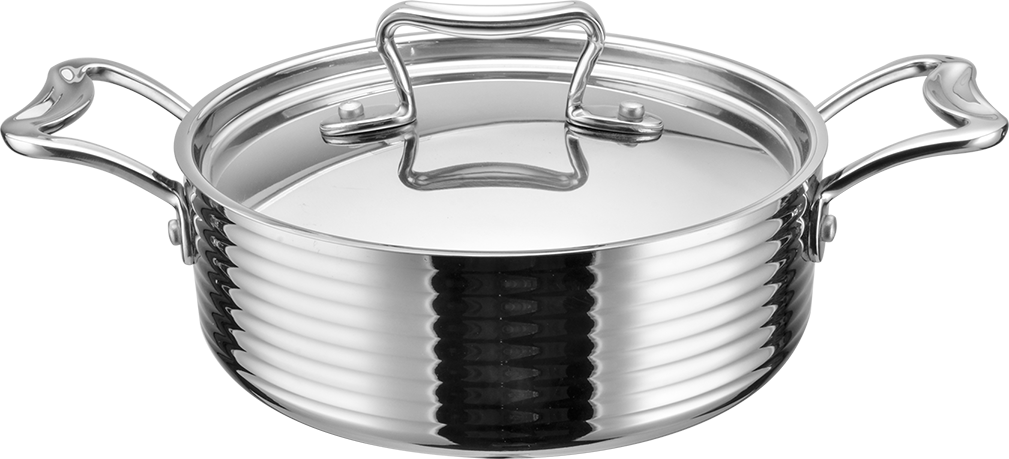
The metallurgical makeup of Stripes Cookware relies on a robust ply construction. Typically featuring an aluminum or copper core sandwiched between layers of stainless steel, this design ensures rapid heat distribution while maintaining a durable exterior. Structurally, this cladding approach competes directly with industry standards. It aims to eliminate hot spots and provide consistent thermal performance across the entire cooking surface.
Cladding is not just about sticking metals together. It involves bonding them under extreme pressure. This prevents delamination when the pan hits a cold sink. The exterior layer is usually 430 stainless steel. This makes it magnetic for induction cooktops. The interior cooking surface is 304 stainless steel. This resists pitting from acidic foods like tomatoes or wine. The core does the heavy lifting. It moves the heat from the burner across the base and up the sidewalls.
Critically examining the cooking surface is vital. If the cookware utilizes a proprietary nonstick or hybrid coating, its composition must withstand daily friction. Evaluating these surfaces requires looking at long-term degradation and scratch resistance. A surface that loses its release properties after six months fails the durability test, regardless of its initial performance.
Many brands claim their coatings are infused with diamonds or titanium. These are often just marketing terms for standard ceramic or PTFE matrices reinforced with hard particles. You must look at how the coating is applied. Is it sprayed on? Is it baked at high temperatures? The adhesion process determines if it will flake off into your food. We test this by running metal spatulas across the surface under pressure. We look for micro-abrasions that eventually lead to total coating failure.
Physical design impacts usability just as much as material composition. Handle riveting must be secure to prevent loosening over time. Ergonomic design and weight distribution determine how easily a cook can maneuver the pan. The physical weight affects daily cooking tasks like tossing ingredients or deglazing. It must strike a balance. It should avoid the heavy, cumbersome nature of thick cast iron while offering more stability than lightweight carbon steel woks.
Browning capabilities serve as a primary benchmark. We must compare how well this cookware performs against traditional copper and carbon steel pans. The ability to produce rich, caramelized fonds is required for pan sauces. This is traditionally a weakness of standard nonstick surfaces, making it a critical test for hybrid or clad designs.
A high-quality pan must respond quickly to heat adjustments on gas, electric, and induction ranges. This allows the cook to prevent burning or undercooking. When you turn the dial down, the pan should cool rapidly. When you turn it up, it should heat instantly. This responsiveness gives you control over delicate sauces like hollandaise or beurre blanc.
Handling delicate, high-sticking proteins like eggs and fish tests the limits of any surface. We evaluate this efficacy by contrasting it with inexpensive, short-lived nonstick pans that excel initially but fail quickly. We also compare it to seasoned cast iron, which requires heavy fat usage to achieve similar release.
Setting a realistic timeline for peak performance is necessary. While standard multi-ply stainless steel is near-indestructible, any pan with a specialized surface coating will have a finite lifespan. Contrasting the expected longevity of these pans against bare metal options provides a clear picture of replacement frequency. You should expect bare stainless to last a lifetime. Coated pans will degrade based on your usage frequency and cleaning habits.
Addressing non-toxic claims objectively requires looking at material stability. We evaluate the cooking surface at high temperatures to verify the absence of forever chemicals. Clean cooking verification depends on the surface remaining stable and inert under heavy thermal stress. If a pan smokes or off-gasses at 500°F, it fails this test.
Calculating the long-term return involves comparing the upfront premium against recurring costs. Cheaper, easily degraded pans require replacement every 1-2 years. Investing in higher-quality construction may present a larger initial cost, but it often yields better financial returns over a decade of use. You stop throwing away scratched pans. You build a reliable collection.
A strategic purchasing framework prevents kitchen clutter. Buyers should scale their kitchen by cherry-picking 2-3 workhorse pieces. You need a 10-inch skillet and a saucier. Do not purchase a comprehensive set filled with unnecessary items. This targeted approach maximizes utility and minimizes wasted expenditure.
Scrutinizing the manufacturer's warranty reveals the brand's confidence in its product. It is crucial to highlight the fine print regarding what constitutes normal wear and tear versus actual manufacturer defects. A strong warranty protects the investment against structural failures like delamination or rivet popping. It rarely covers scratches from metal utensils.
Transitioning to new cookware requires adjustments in cooking technique. Users must adapt their preheating protocols, oil and fat usage, and temperature management to prevent sticking and optimize browning. Failing to adjust these habits often leads to poor performance and frustration. You cannot cook on stainless steel the same way you cook on Teflon.
Strict maintenance requirements dictate the lifespan of the pan. While many brands claim dishwasher safety, the reality is that harsh detergents degrade surfaces rapidly. Hand-washing is almost always necessary to preserve surface integrity and prevent premature failure. Use warm soapy water and a non-abrasive sponge.
Surface damage is a significant risk. Specifying which utensils are genuinely safe to use is critical. Wood and silicone are generally safe. Metal utensils will often scratch hybrid or coated surfaces, degrading the pan and potentially voiding the warranty. Protect your investment by using the right tools.
Evaluating kitchenware requires looking past the marketing hype and focusing on daily utility. The multi-ply construction offers solid thermal control, but it demands adherence to specific maintenance routines. Success with this cookware depends heavily on how you use and clean it.
A: You must verify the specific surface material. If it utilizes a ceramic or bare stainless steel surface, it is generally free of PTFE and stable at high heat. Always check the manufacturer's material disclosures regarding PFAS.
A: It competes by offering similar multi-ply construction for heat distribution. The primary differences lie in the specific surface treatments and ergonomic handle designs tailored to different user preferences.
A: If the pan features any nonstick or hybrid coating, metal utensils will cause scratches and degrade the surface. Stick to wood or silicone to maintain integrity and avoid voiding the warranty.
A: Buying individual pieces is almost always better. Sets often contain filler items you won't use. Purchase a skillet and a saucepan based on your actual daily cooking habits.
A: Yes, provided it features a magnetic stainless steel base. The multi-ply construction usually includes a magnetic exterior layer specifically designed for induction compatibility.
A: Bare stainless steel lasts a lifetime. If it has a nonstick or hybrid coating, expect 2 to 5 years of peak performance, depending heavily on daily use and strict adherence to hand-washing protocols.