


Views: 0 Author: Site Editor Publish Time: 2026-07-09 Origin: Site


Inheriting heirloom metalware often introduces a complex intersection of deep sentimental attachment, the emotional weight of clearing out a childhood home, and undocumented financial value. You might uncover a tarnished piece wrapped in newspaper in an attic or receive a family centerpiece passed down through generations. Owners frequently struggle to differentiate between mass-produced mid-century replicas and historically significant, hand-wrought pieces, leading to critical errors in restoration, storage, or liquidation. This guide provides a structured, evidence-based framework for evaluating an inherited Hammered Plate, assessing its material composition, identifying its original functional design, mitigating restoration risks, and determining the most viable path forward—whether that involves professional appraisal, creative conservation, or sale.
Evaluating family metalware begins with defining your primary objective. You must determine whether your goal is maximizing financial return through a sale, ensuring safe daily utility, or preserving structural integrity for archival display. Each path requires a different approach to handling, documentation, and storage. A piece destined for a museum archive requires strict climate control and zero surface intervention. An item intended for daily kitchen use demands rigorous food-safety testing and structural reinforcement. Establishing this baseline prevents irreversible mistakes during the initial sorting phase.
Documenting personal history acts as your initial provenance. Navigating the emotional process of sorting through a parent's or grandparent's kitchen during unexpected home transitions is challenging. However, extracting verifiable timelines from family narratives provides tangible data. You need to identify if the piece was acquired during the Mid-Century Modern boom, brought over as an immigrant heirloom, or predates the 1920s. Cross-reference geographic origins mentioned in personal stories with known regional metalworking hubs to build a credible timeline. For example, a story about a grandfather working in Pennsylvania might align with the aluminum forge industries prevalent there in the mid-20th century.
You must also weigh sentimental versus market valuation trade-offs. High emotional value and nostalgic kitchen memories do not inherently correlate with high market demand. A plate that sat on your grandmother's dining table for fifty years holds immense personal worth. Yet, appraisers evaluate based on material, maker, and condition. Establishing realistic expectations for appraisal outcomes prevents disappointment and guides practical decision-making. A heavily dented, unmarked aluminum tray might hold zero auction value but serve as a priceless family artifact when properly mounted on a wall.
The base material dictates both care requirements and potential value. Aluminum is lightweight, non-magnetic, and highly prevalent in 1940s-1950s domestic ware. It generally holds lower market value but remains highly durable and resistant to tarnish. During the post-war era, forged aluminum became a popular, inexpensive alternative to silver. You will often find these pieces featuring floral motifs, such as dogwood or chrysanthemum patterns, stamped into the surface.
Copper and brass are heavier and prone to distinct oxidation, known as verdigris. When handling these, you must assess whether the piece is solid or merely plated over a cheaper base metal. A simple magnet test helps here; solid copper or brass will not react to a magnet, whereas a steel core will. Silver and pewter represent high-value materials requiring immediate identification of hallmarks. They necessitate strict handling protocols, like wearing cotton gloves, to prevent surface degradation from the oils in human skin.
| Metal Type | Weight Profile | Oxidation Characteristics | Magnetic Response |
|---|---|---|---|
| Aluminum | Very Light | Dull gray oxidation, no active rust | Non-magnetic |
| Copper | Heavy | Green verdigris, dark brown patina | Non-magnetic |
| Brass | Heavy | Dark mustard tarnish, green spotting | Non-magnetic |
| Silver (Sterling) | Moderate to Heavy | Black or dark gray tarnish | Non-magnetic |
| Plated Steel | Heavy | Red/orange active rust where plated layer fails | Strongly Magnetic |
Many large, Mid-Century hammered plates were not meant for the dining table. The modular tray table phenomenon saw brass or copper imports manufactured to serve as removable tops for folding spider-leg stands. These were highly popular in the 1960s and 1970s, often imported from North Africa or the Middle East. Identifying these "legless" antiques requires checking the underside of the plate. Look for wear rings, mounting brackets, or structural lips that indicate it was once part of a multi-component furniture piece.
If you discover evidence of missing parts, you must assess the feasibility and cost of locating period-accurate replacement legs. Sometimes, valuing the plate strictly as a standalone decorative wall hanging is the more practical route. Attempting to force modern, mismatched legs onto a vintage tray often damages the metal rim and degrades the overall aesthetic coherence of the piece.
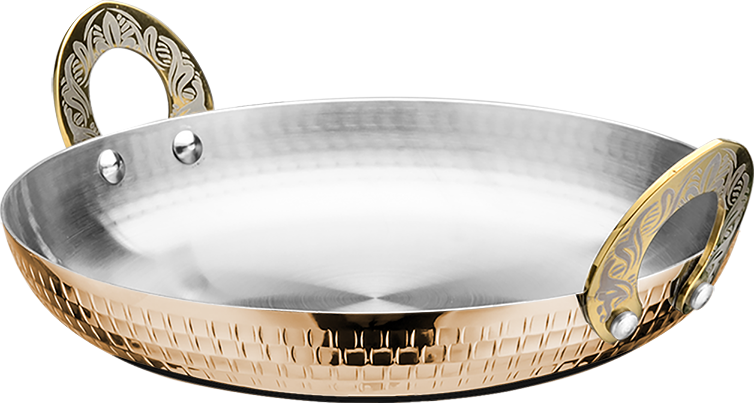
Distinguishing between hand-wrought and machine-stamped production is vital for establishing authenticity. Authentic hand-hammering presents asymmetrical, varied indentations. The artisan strikes the metal repeatedly, adjusting force and angle based on the material's resistance. Machine-stamped pieces exhibit uniform, repeating patterns designed to mimic hand-forging. Inspect the edges and underside for tool marks, planishing evidence, or casting seams. A completely smooth underside on a supposedly hand-hammered piece is a definitive indicator of machine stamping.
Locating and verifying maker’s marks confirms authenticity. Conduct a systematic inspection of the base, rim, and handles for stamped signatures, guild marks, or patent numbers. You might find notable marks like Till & Sons or regional mid-century metal crafters. Utilize authoritative databases to date the piece based on the evolution of the manufacturer's typography, logo, or registered design numbers. Pay close attention to the depth and clarity of the stamp; authentic vintage marks often show uneven wear consistent with decades of handling and cleaning.
Knowing when to escalate to a professional is critical. Indicators that necessitate a certified appraiser include solid silver composition, verified 19th-century hallmarks, or association with notable artisans. Do not waste money appraising common 1950s aluminum serving trays unless they possess documented historical significance. Prepare provenance narratives, macro-photography of marks, and detailed condition reports for insurance riders. Proper documentation ensures accurate replacement value coverage in the event of theft, fire, or transit damage.
If you choose to sell, evaluate auction houses versus direct-to-collector platforms. Compare the commission structures, time-to-liquidation, and audience reach of specialized auctioneers against online antique marketplaces and social forums. High-end silver or documented artisan pieces perform best at established auction houses where vetted collectors bid. Common mid-century aluminum or brass pieces move faster on direct-to-consumer platforms.
Understand condition-based pricing. Dents, deep scratches, missing legs, and absent components directly impact the final listing price. Be transparent about all damage in your listings. Attempting to hide a crack or a missing bracket will result in returns, damaged seller reputation, and lost shipping costs. Price the item based on completed, sold listings of identical pieces in similar condition, not on active, aspirational asking prices.
Aesthetic styling in modern interiors breathes new life into vintage items. Integrate quirky, unhinged, or uniquely worn vintage plates into specific design aesthetics. They fit well in cottagecore kitchens, eclectic gallery walls, or minimalist Mid-Century Modern spaces. A heavily oxidized copper tray provides excellent textural contrast against clean, white modern cabinetry.
Handle damaged or broken goods with creative upcycling strategies. Use fractured metalware for mosaic inlay, shadow box framing, or turning fragments into wind chimes. Avoid deceptive, value-ruining DIY repairs like using modern epoxy to glue a broken handle back onto a silver tray. Select non-reactive, vinyl-coated wire hangers or display stands to prevent galvanic corrosion when displaying metal plates on walls or shelving. Direct contact between dissimilar metals, like a steel nail and a copper plate, will cause accelerated, localized corrosion over time.
Aggressive polishing removes the oxidized layer, or patina, that collectors use to verify age. This can potentially reduce the item's value by up to 50%. The patina serves as a historical record of the item's environment and usage. Stripping it away leaves a harsh, unnaturally bright surface that screams of amateur interference. Employ evidence-based, non-abrasive cleaning methods. Utilize neutral pH soap and warm water to remove active contaminants like dust, grease, or food residue without stripping historical wear and character. Always test cleaning methods on an inconspicuous area first, such as the underside of the rim.
Evaluate older metalware for toxicity risks. Lead solder, reactive copper surfaces, or degraded tin linings render the plate unsafe for culinary use. Many antique copper cooking and serving vessels were lined with tin to prevent copper toxicity. If this tin lining is scratched, worn thin, or missing, the piece must be re-tinned by a professional before it can touch food again.
Understand the chemical interaction between vintage aluminum or copper and acidic foods. Tomatoes, citrus, and vinegar will react violently with bare aluminum and copper. This reaction causes pitting in the metal, ruins the flavor of the food, and leads to potential chemical leaching into meals. Inherited plates are often relegated to purely decorative status to avoid these exact hazards. If you must use a vintage metal tray for serving, line it completely with food-grade parchment paper or glass inserts.
Assess the risks of attempting to hammer out dents in aged, brittle metal. Warping and metal fatigue can cause the piece to crack under pressure. Metal hardens over time and through use, a process known as work hardening. Striking a work-hardened antique plate with a modern steel hammer will likely shatter or tear the metal. Identify when to hire a specialized metallurgist or conservator versus attempting DIY cosmetic improvements. Professional intervention is necessary for structurally compromised heirloom pieces. Conservators use specialized annealing processes to safely soften the metal before attempting any reshaping.
The utility and value of an inherited metal plate depend entirely on accurate material identification and understanding its original design context. Avoid premature, aggressive restoration at all costs. Base your next steps on the presence of maker's marks, base metal weight, and personal design goals. Reserve professional appraisals for heavy, marked, or precious-metal pieces. Designate lightweight, unmarked aluminum or uniquely damaged plates for creative, sentimental display.
A: Hand-forged plates feature irregular, asymmetrical hammer marks and unique tool impressions on the reverse side. Machine-made pieces display perfectly uniform, repeating patterns and often have completely smooth, unworked undersides.
A: Highly likely. During the Mid-Century Modern era, many large brass, copper, and aluminum hammered plates were sold as tray-table tops meant to rest on folding wooden or brass spider legs. Look for wear marks or brackets on the underside of your plate to confirm if it was part of a modular table.
A: Yes, in most cases. Polishing removes the natural patina, which antique collectors and appraisers rely on to verify the age, history, and authenticity of the piece. It is recommended to leave the surface untouched until professionally evaluated.
A: While generally safe for dry goods, vintage aluminum can react with acidic or alkaline foods, causing pitting in the metal and potential leaching. They are best utilized for decorative purposes or serving non-reactive, dry items.
A: Do not attempt to solder or repair the plate with modern adhesives, as this can cause irreversible chemical damage. Instead, consider creative archival repurposing, such as mounting the fragments in a shadow box, incorporating them into a mosaic, or hanging them as a rustic wall arrangement.
A: Seek appraisers certified by recognized organizations such as the Appraisers Association of America (AAA) or the International Society of Appraisers (ISA), specifically those with a stated specialty in antique metalwork or silver.