


Views: 0 Author: Site Editor Publish Time: 2026-06-30 Origin: Site


Purchasing metal goods online removes the ability to evaluate weight, balance, and finish in person. Buyers must rely entirely on product descriptions and specification sheets. When outfitting a commercial kitchen, catering operation, or high-volume dining venue, the stakes for selecting the right equipment are incredibly high. Investing in substandard serving equipment leads to rapid tarnishing, denting under heavy use, and compromised food presentation. Replacing cheap serveware frequently negates any initial savings and damages brand perception.
To make a confident online purchase, buyers must understand the technical specifications of metallurgy. You need to know exactly how grades, gauges, clad construction, and finishes impact daily operations. Learning how to verify these claims before committing to a supplier ensures that your Stainless Steel Serveware will withstand the rigors of heavy use. This guide breaks down the essential criteria for selecting durable, high-performance serving pieces without ever needing to hold them in your hands first.
Defining what makes a serving piece viable for long-term use requires looking at durability, aesthetic retention, and hygiene. Operators need equipment that can survive constant handling, high-heat washing, and exposure to various food profiles without degrading. Stainless steel meets these success criteria more effectively than almost any other material available on the market.
Analyzing the tensile strength of stainless steel compared to ceramic, glass, or silver-plated alternatives reveals why it dominates high-traffic catering environments. Ceramic and glass chip or shatter when dropped, creating safety hazards and immediate replacement needs. Silver-plated items require labor-intensive polishing and eventually lose their plating, exposing the base metal. High-quality stainless steel resists impact, handles physical stress, and maintains structural integrity over years of continuous service.
Consider the daily operational stress in a busy banquet hall. Trays are dropped, stacked haphazardly, and pushed through commercial dishwashers at extreme temperatures. A ceramic platter might survive a few months before chipping. A heavy-gauge stainless steel platter will last a decade. The material absorbs impact energy rather than fracturing. This resilience makes it the default choice for any operation prioritizing longevity.
Hygiene is a non-negotiable factor in food service. High-grade stainless steel features a non-porous surface that does not harbor bacteria, making it exceptionally easy to sanitize. Furthermore, premium grades are non-reactive. When serving highly acidic foods like tomato sauces, citrus dressings, or vinegar-based marinades, the metal will not leach metallic flavors into the dish or suffer from surface pitting. This chemical stability protects both the flavor profile of the food and the longevity of the serving vessel.
In practical terms, non-reactivity means you can leave a lemon-caper sauce in a chafing dish for a four-hour service without worrying about the metal degrading or the sauce taking on a tinny taste. The passive chromium oxide layer on the steel's surface acts as an invisible shield. As long as this layer remains intact, the steel remains completely inert and food-safe.
Breaking down the metallurgical composition is the first step in evaluating quality. The numbers associated with stainless steel—such as 18/10 or 18/0—represent the percentages of chromium and nickel in the alloy. Chromium provides basic rust resistance, while nickel adds a silver-like luster and significantly boosts corrosion resistance.
The 300 series represents the premium standard for fine dining and heavy commercial use. An 18/10 composition contains 18% chromium and 10% nickel, while 18/8 contains 8% nickel. The addition of nickel is vital. It changes the microstructure of the steel, making it highly resistant to rust, staining, and corrosion. This grade provides maximum durability against harsh commercial dishwashing chemicals and acidic foods, while maintaining a brilliant, polished appearance over time.
When you handle an 18/10 serving spoon, you immediately notice the bright, silver-like finish. This is the nickel at work. Beyond aesthetics, the 300 series handles the extreme alkaline environment of commercial dish detergents without pitting. If your operation involves heavy daily washing and acidic food contact, 300-series steel is the only viable option.
The 400 series, typically labeled as 18/0, contains 18% chromium but zero nickel. Because it lacks nickel, this grade is magnetic. However, the absence of nickel significantly increases the risk of pitting, staining, and rusting over time. It is best suited for dry display items, short-term use, or environments where exposure to moisture and acids is strictly limited.
You will often see 18/0 used in fast-casual settings for items like bread baskets or dry snack bowls. It serves a purpose, but you must manage expectations. If you leave an 18/0 tray wet overnight, you will likely find rust spots by morning. It requires immediate drying and careful handling to maintain its appearance.
| Grade Series | Composition (Cr/Ni) | Corrosion Resistance | Magnetic Properties | Best Application |
|---|---|---|---|---|
| 300 Series (18/10) | 18% Chromium / 10% Nickel | Excellent | Non-Magnetic | High-acid foods, heavy commercial washing, fine dining |
| 300 Series (18/8) | 18% Chromium / 8% Nickel | Very Good | Non-Magnetic | General commercial use, hot holding, daily service |
| 400 Series (18/0) | 18% Chromium / 0% Nickel | Fair to Moderate | Magnetic | Dry displays, short-term use, budget-restricted operations |
When shopping online, you must cross-reference manufacturer specification sheets. Look for clear disclosures of the exact metallurgical breakdown. Evasive product descriptions that simply state "stainless" without providing the series or chromium/nickel ratio are major red flags. Additionally, check for NSF certifications or similar industry standards that validate the material's suitability for commercial food contact.
Translating physical requirements into online purchasing criteria requires understanding how thickness and construction methods impact performance. You cannot feel the weight of the item through a screen, so you must rely on technical measurements.
Metal thickness is measured by gauge, which operates on an inverse scale. A lower gauge number indicates thicker metal. For example, 22-gauge steel is thinner and much more prone to denting than 18-gauge steel. For heavy-duty serving trays and bowls that will see daily abuse, prioritizing a lower gauge number ensures the piece will not warp or dent easily under pressure.
In a commercial setting, a 22-gauge tray will flex when loaded with heavy plates, potentially causing spills. An 18-gauge or 16-gauge tray remains rigid. When reviewing online specs, always look for the gauge number. If it is not listed, the manufacturer is likely using thin, inferior steel.
Balance matters immensely for service staff carrying loaded trays through crowded dining rooms. While you cannot test balance online, you can interpret shipping weights as a proxy for product density. If a large 24-inch serving platter has an unusually low shipping weight, it is likely constructed from thin, high-gauge steel that will flex under the weight of heavy dishes.
Compare the shipping weights of similar items across different brands. A heavier item generally indicates thicker steel and better construction. Keep in mind that rolled edges add structural integrity without adding massive amounts of weight, so look for that feature in the product photos.
For hot-holding serveware, such as chafing dishes or soup marmites, multi-ply construction (like 3-ply or 5-ply) is critical. Stainless steel alone is a poor conductor of heat. Multi-ply bases feature an aluminum or copper core encapsulated between layers of stainless steel. This core distributes heat evenly across the base, eliminating hot spots and preventing delicate sauces from scorching during extended buffet service.
If you place a single-ply stainless steel pan over a chafing fuel burner, the heat concentrates directly above the flame. The food in that specific spot will burn, while the rest remains lukewarm. A clad base pulls that heat outward, warming the entire surface evenly. This is a mandatory feature for any heated service application.
In fast-paced kitchens, serveware often transitions directly from cold storage refrigerators to hot service stations, induction plates, or fuel burners. Thin, single-ply steel will warp under this rapid temperature change, known as thermal shock. Heavy-gauge steel and multi-ply construction absorb and distribute these temperature fluctuations safely, maintaining a flat base and stable structure.
Warped pans spin on flat induction surfaces and fail to sit securely in chafing stands. Investing in heavy-duty construction prevents this operational headache and ensures your equipment remains functional and safe to use.
Matching the visual style to the operational reality of the venue is vital. The finish on your serveware dictates not only the aesthetic presentation but also the daily labor required to maintain it.
A mirror polish offers a highly reflective, brilliant shine. It is best suited for upscale events, fine dining establishments, and high-end display pieces. The primary trade-off is maintenance. Mirror finishes require rigorous polishing to remove water spots and are highly susceptible to visible micro-abrasions and fingerprints. Staff must handle these pieces with care, often using gloves during setup.
If you choose mirror-polished items, you must factor in the labor cost of polishing them after every wash. They look spectacular under banquet lighting, but they demand constant attention to maintain that pristine appearance.
A brushed or satin finish provides a muted, matte aesthetic. This finish is exceptionally practical for high-volume buffets, casual dining, and outdoor catering. The textured surface is highly effective at hiding fingerprints, smudges, and minor scratches that accumulate during daily service. It requires significantly less labor to keep looking presentable throughout a long shift.
For operations prioritizing efficiency over high-end aesthetics, brushed finishes are the smart choice. They emerge from the dishwasher looking clean and require minimal touch-ups before hitting the buffet line.
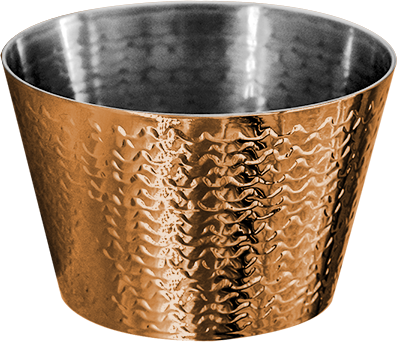
Hammered finishes feature a dimpled texture that reflects light dynamically, making them ideal for rustic or contemporary presentations. Operationally, a hammered texture conceals dents and heavy wear beautifully. However, the trade-off involves cleaning. Staff must ensure that food particles do not remain trapped in the texturing during the washing process, requiring slightly more attention at the dish pit.
The hammered look is excellent for hiding the inevitable dings that occur in catering. A dent on a mirror-polished tray is glaringly obvious; a dent on a hammered tray just blends into the texture.
Different types of serving equipment require specific considerations during the procurement process. Inventory planning should account for the unique structural needs of each category.
When selecting platters and trays, sizing considerations and stackability are paramount for efficient storage. Pay close attention to rim styles. Rolled edges provide superior structural integrity and prevent the tray from twisting under heavy loads, whereas flat edges offer a modern look but may lack the same rigidity.
Stackability is often overlooked until the equipment arrives. Ensure the product descriptions mention nesting capabilities. If trays do not nest properly, they will consume massive amounts of valuable storage space in your facility.
Buffet systems are complex investments. Evaluate the hinge mechanisms on roll-top lids to ensure smooth, quiet operation. Lift-off lids are simpler but require space for guests to place them down. Additionally, verify that the fuel-holder features safety mechanisms to prevent accidental spills of flammable chafing fuel.
Look for chafing dishes with condensation catchers. These small channels direct water vapor back into the water pan rather than letting it drip onto the table or into the food, keeping the buffet area clean and safe.
For liquid service, pour-spout precision is critical to prevent dripping and stained tablecloths. Assess the handle welding carefully. Riveted handles offer robust mechanical strength, while spot-welded handles provide a seamless interior that is easier to clean. Ensure any spot welding is done to a high commercial standard to prevent snapping.
A poorly designed pour spout will cause liquids to run down the side of the pitcher after every pour. Read customer reviews specifically looking for mentions of dripping or poor pouring performance.
Serving utensils endure constant flexing and pressure. Prioritize one-piece construction whenever possible. Utensils stamped from a single piece of heavy-gauge steel eliminate food traps where bacteria can hide and remove the risk of the tool snapping at a weak joint or weld point.
Two-piece utensils, where the handle is welded to the bowl or blade, are notorious for breaking under heavy use. One-piece construction is stronger, more sanitary, and ultimately more reliable.
Vetting suppliers accurately protects your purchasing investment. When you cannot inspect items physically, you must rely on strict analytical protocols to separate reputable vendors from low-quality manufacturers.
A trustworthy product listing provides exhaustive details. You should expect exact dimensions, capacity limits in both ounces and liters, and full material disclosures. If a supplier cannot provide the specific grade and gauge of their steel, they are likely hiding inferior materials.
Look for engineering drawings or detailed schematics in the image gallery. Suppliers who provide exact measurements for interior depth, exterior width, and handle length demonstrate a commitment to transparency and professional standards.
Be vigilant against marketing jargon designed to obscure material quality. Phrases like "stainless look" or "chrome-plated" indicate the item is not solid stainless steel. Suspiciously low shipping weights for large, supposedly heavy-duty items are a clear indicator of thin, low-gauge metal that will fail in a commercial setting.
Another red flag is the term "rust-proof." No stainless steel is entirely rust-proof under all conditions; it is rust-resistant. Reputable manufacturers use accurate terminology and provide care instructions to maintain that resistance.
Before committing to a massive bulk procurement, order a single sample piece. Run internal stress tests on this sample. Evaluate its balance, check for heating consistency if it is a hot-holding item, and test its resistance to immediate staining with acidic foods. This small upfront investment prevents catastrophic bulk purchasing errors.
Metal serveware is heavy and prone to denting if improperly packaged during transit. Review the supplier's shipping protocols and negotiate clear return policies for bulk orders. You must have a guaranteed recourse if a pallet arrives with transit damage or if the items do not match the stated online specifications.
Inspect the packaging details. Items should be individually wrapped and separated by cardboard or foam dividers. Bulk items shipped loose in a single box will inevitably arrive scratched and dented.
Understanding how to care for your equipment ensures it remains an operational asset for years. Proper maintenance protocols protect the metallurgical integrity of the steel and preserve its visual appeal.
High heat and harsh detergents impact different grades of steel differently. While 18/10 steel handles commercial dishwashing cycles effortlessly, 18/0 steel may begin to show signs of surface degradation or pitting over a 12-month cycle if exposed to highly caustic chemicals without proper rinsing and drying.
Ensure your dish machine is calibrated correctly. Excessive rinse aid or highly chlorinated detergents will strip the passive layer from the steel, leading to rapid oxidation. Regular testing of your chemical concentrations protects your equipment investment.
Maintaining the passive chromium oxide layer is essential for preventing rust and water spots. Implement strict operational protocols for immediate drying and polishing after washing. Do not allow serveware to air-dry, as mineral deposits from local water supplies will cause spotting.
Heat tint, often appearing as a "rainbow" discoloration, is caused by direct heat exposure from chafing fuels or warming elements. This is a surface-level oxidation, not a structural failure. You can remove it safely using gentle acids like white vinegar or specialized commercial stainless steel powder cleansers. Avoid abrasive scouring pads, which will permanently scratch mirror or satin finishes.
For stubborn protein stains or burnt-on food, soak the item in a warm solution of water and mild detergent. Never use steel wool or wire brushes on stainless steel serveware. These tools embed microscopic iron particles into the surface, which will rapidly rust and ruin the piece.
A: The 300 series, specifically 18/10 or 18/8 stainless steel, is the best grade for serveware. It contains high levels of chromium and nickel, providing exceptional resistance to rust, corrosion, and staining, making it ideal for commercial environments and acidic foods.
A: The numbers represent the chromium and nickel percentages. 18/10 contains 18% chromium and 10% nickel, offering superior rust resistance and a bright polish. 18/0 contains 18% chromium but zero nickel, making it magnetic, less expensive, but significantly more prone to pitting and rust.
A: The "rainbow" stain, or heat tint, is caused by high heat exposure thickening the steel's protective chromium oxide layer. It is easily cleaned using a splash of white vinegar or a non-abrasive commercial stainless steel cleaner rubbed gently with a soft cloth.
A: Stainless steel is a poor heat conductor. Multi-ply construction sandwiches a highly conductive metal, like aluminum or copper, between stainless steel layers. This ensures even heat distribution, preventing hot spots that can scorch delicate foods during buffet service.
A: While highly resistant, stainless steel can rust or pit if exposed to harsh chemicals, prolonged moisture, or high-salt environments without proper cleaning. Lower grades like 18/0 are much more susceptible to tarnishing than premium 18/10 grades.
A: Prevent scratches by avoiding abrasive scouring pads and harsh powder cleansers. Wash with soft cloths or sponges, dry immediately to prevent water spots, and store trays with protective dividers or soft liners between them to prevent metal-on-metal contact.
A: Look for the gauge number in the product specifications. A lower gauge number indicates thicker metal (e.g., 18-gauge is thicker than 22-gauge). If the gauge is not listed, check the shipping weight as a secondary indicator of the item's density and thickness.