


Views: 0 Author: Site Editor Publish Time: 2026-07-01 Origin: Site


Selecting premium stainless steel cookware often feels like navigating a minefield of exaggerated marketing claims. The market is saturated with brands promising culinary perfection, leaving buyers questioning which products actually perform under daily kitchen stress. Consumers frequently struggle to determine if aesthetic-driven cookware lines deliver commercial-grade heat distribution, true induction compatibility, and long-term durability without demanding excessive maintenance overhead.
This evaluation provides an objective, evidence-based review of the Chantal line, focusing on material construction, real-world cooktop performance, and actual utility. We will strip away the marketing gloss to examine how this equipment handles thermal shock, searing proteins, and delicate sauce reductions. By analyzing the structural integrity and daily usability of Stripes Cookware, you can determine if it aligns with your cooking habits and kitchen infrastructure.
Standard pots and pans prioritize low manufacturing costs over cooking dynamics. Investment-grade cookware is defined by its ability to control heat, resist structural degradation, and perform reliably across decades of use. The primary differentiator lies in the metallurgical composition and the engineering of the base.
High-quality cookware must heat quickly and maintain a consistent temperature across the entire cooking surface. Baselines for thermal performance dictate that a pan should not experience severe temperature drops when cold proteins are introduced. Even heat distribution prevents localized hot spots that scorch delicate sauces or cause uneven searing on meats. You need a pan that recovers its temperature rapidly after you drop a cold steak onto the metal.
When evaluating thermal mass, we look at the thickness of the conductive core. A thicker aluminum or copper core holds more heat energy. This energy transfers to the food, creating the Maillard reaction necessary for flavor development. Thin pans lose their heat immediately, resulting in steaming rather than searing.
Cooking surfaces must remain non-reactive. Stainless steel provides an inert barrier, ensuring highly acidic foods like tomatoes or wine reductions do not take on a metallic taste. The structural integrity of the pan must resist warping under high heat or rapid temperature changes. Warped pans spin on flat glass cooktops, ruining heat transfer and creating a safety hazard.
Durability also extends to the handle attachments. Riveted handles offer superior mechanical strength compared to spot-welded alternatives. Over years of lifting heavy stews and tossing vegetables, weak welds will eventually fail. Heavy-duty rivets ensure the handle remains securely attached for the life of the vessel.
Modern kitchens demand versatility. Premium cookware must perform equally well on traditional gas burners, standard electric coils, and modern magnetic induction stoves. A flat, robust base is critical to ensure maximum contact with smooth-top ranges and efficient energy transfer on induction systems.
| Cooktop Type | Performance Requirement | Potential Failure Points in Cheap Cookware |
|---|---|---|
| Gas | Flame tolerance, even heat up the sidewalls | Scorched exterior finishes, hot spots over burners |
| Electric Coil | Direct contact, warp resistance | Base warping leading to uneven heating |
| Induction | Magnetic reactivity, flat base for sensor contact | Buzzing noises, failure to register on the burner |
Evaluating the physical construction reveals the true capability of any kitchen tool. The specifications dictate how the equipment will behave under thermal load and mechanical stress. We look at the raw materials and how they are assembled.
The construction utilizes heavy-duty commercial-grade stainless steel. The base thickness is engineered to prevent warping while providing enough mass for adequate heat retention. The wall thickness supports structural rigidity, ensuring the vessel maintains its shape even after years of heavy utility. The tri-ply construction sandwiches a conductive aluminum core between layers of durable stainless steel.
This layered approach maximizes the benefits of both metals. Aluminum provides rapid heat transfer, while stainless steel offers a durable, non-reactive cooking surface. The exterior layer is specifically formulated with magnetic stainless steel to ensure compatibility with induction ranges.
The signature exterior color stripe, available in finishes such as Blue Cove, serves primarily as an aesthetic differentiator. While it adds visual appeal to the kitchen, it does not negatively impact heat distribution. The exterior finish is designed to withstand standard stovetop temperatures.
Direct, prolonged exposure to aggressive open gas flames requires mindful burner sizing to prevent localized discoloration of the enamel. If the gas flame extends beyond the base of the pan, it will scorch the colored stripe. Proper heat management preserves the visual integrity of the cookware.
Handle design directly impacts safety and maneuverability. The handles are engineered for heat displacement, keeping them cooler on the stovetop, and are riveted for grip stability and weight distribution. A well-designed handle prevents wrist fatigue when pouring liquids or tossing ingredients.
The tempered glass lids offer the distinct advantage of visual moisture monitoring without lifting the lid and losing heat. Glass inherently carries a durability trade-off compared to solid steel lids, requiring careful handling to avoid impact shattering. The metal rims on the glass lids provide a secure fit, trapping steam effectively during braising or steaming operations.
Acquiring cookware often involves choosing between open-stock pieces and curated bundles. Individual pieces, such as a 10-inch fry pan or a 1-quart saucepan, allow users to target specific culinary needs. Complete curated bundles offer comprehensive kitchen outfitting.
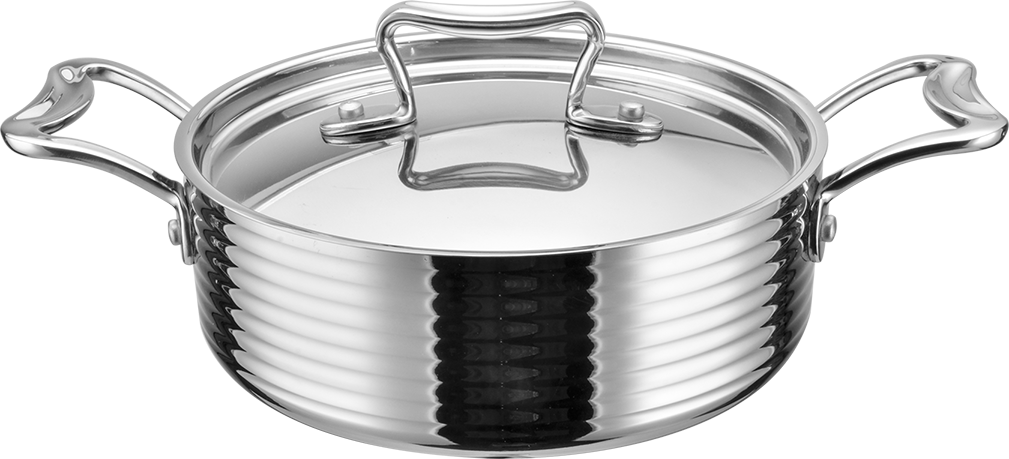
Theoretical specifications must translate into practical stovetop results. Performance varies significantly depending on the heat source and the culinary technique applied. We tested these pans across multiple scenarios to gauge their real-world utility.
The flat base design and magnetic core are optimized for induction efficiency. The cookware demonstrates rapid responsiveness to sudden temperature adjustments, a critical requirement for induction users. The flat bottom ensures continuous sensor contact, preventing the induction burner from cycling off prematurely.
Induction cooking relies on magnetic fields to generate heat directly within the pan. If the base is not perfectly flat, the magnetic field is disrupted, leading to uneven heating or failure to activate the burner. This cookware maintains a solid connection, allowing for precise temperature control from a rolling boil down to a gentle simmer.
On traditional gas and electric ranges, the heat distribution manages hot spots effectively. The base facilitates edge-to-edge searing capabilities, allowing for maximum surface utilization. The heavy-duty construction provides substantial thermal shock resistance, minimizing the risk of base deflection when transitioning from high heat to deglazing.
Gas burners often create a ring of intense heat. The conductive core in these pans disperses that heat outward, preventing a scorched ring of food in the center of the pan. Electric coils present a similar challenge, requiring a thick base to absorb and distribute the concentrated thermal energy evenly.
Practical application testing reveals strong searing performance and heat retention for dense proteins. The stainless steel surface is highly effective for fond development, providing the necessary foundation for rich pan sauces through efficient deglazing. For delicate tasks, the cookware allows for precise low-temperature control, essential for butter emulsions and gentle sauce reductions.
| Culinary Technique | Recommended Heat Setting | Expected Performance |
|---|---|---|
| Searing Steaks | Medium-High | Excellent crust formation, strong fond development |
| Sautéing Vegetables | Medium | Even browning, rapid moisture evaporation |
| Reducing Sauces | Medium-Low | Consistent simmer without scorching the edges |
| Cooking Eggs | Low | Requires precise temperature control and adequate fat |
Transitioning to uncoated stainless steel requires a fundamental shift in cooking technique. Failing to adapt will result in frustration and compromised food quality. You cannot treat these pans like chemical non-stick surfaces.
Cooking on uncoated stainless steel means managing food adhesion through temperature control. To prevent sticking, users must master the Leidenfrost effect, commonly tested via the water drop test. Adding cold food to cold oil in a cold pan guarantees aggressive sticking.
Preserving the exterior colored stripe requires adherence to specific care requirements, avoiding highly abrasive scouring pads on the enamel. Internally, protein staining and heat tinting are inevitable realities. Restoring the interior finish typically necessitates specialized powder cleaners formulated with oxalic acid to dissolve mineral deposits and polymerized oils.
Routine cleaning should involve hot water, dish soap, and a non-abrasive sponge. If food is severely stuck, deglaze the pan with water while it is still warm, or simmer soapy water for ten minutes to loosen the debris. Never use steel wool on the exterior colored stripe, as it will permanently scratch the finish.
While the steel vessels are robust, environmental limitations exist. The tempered glass lids have specific oven-safe temperature ceilings that must be respected to prevent thermal shattering. The exterior color stripe finish may degrade if subjected to extreme oven broiling temperatures, requiring users to verify manufacturer thermal limits before high-heat oven transfers.
Thermal shock is the enemy of all cookware. Never plunge a hot pan directly into cold water. This rapid contraction of the metal can cause permanent warping, destroying the flat base required for induction and electric cooktops. Always allow the pan to cool slightly before washing.
Determining true value requires looking past retail claims and assessing daily utility, material lifespan, and how the equipment compares to established market alternatives. You are investing in tools that should last a lifetime.
Evaluating the premium retail value against actual daily utility reveals a solid return on investment for dedicated home cooks. The material lifespan of heavy-duty stainless steel far exceeds that of any coated non-stick alternative, justifying the initial expenditure through decades of reliable service. You buy it once, and you learn to use it properly.
Cheap non-stick pans require replacement every few years as the coating degrades. Stainless steel offers a permanent solution. The initial cost is higher, but the long-term utility makes it a financially sound decision for anyone who cooks regularly.
After a few weeks of real-world kitchen use, expect minor aesthetic changes. Micro-scratches on the interior surface are normal and do not affect performance. The structural integrity remains uncompromised, though users must adapt their cleaning routines to maintain the exterior color finish.
You will likely experience a few stuck meals as you learn the temperature control required. This is part of the process. Once you understand how the metal reacts to your specific stove, the sticking issues will disappear, and you will appreciate the superior browning capabilities.
The primary trade-off involves weighing the aesthetic appeal and the convenience of glass lids against the mandatory learning curve of uncoated stainless steel. Users must be willing to abandon the convenience of chemical non-stick coatings in favor of superior searing capabilities and lifetime durability.
Glass lids offer visibility but lack the rugged durability of solid steel lids. If you frequently drop lids or stack them haphazardly in deep drawers, the glass may eventually chip or shatter. You must handle them with a reasonable degree of care.
When positioned against similarly constructed tri-ply or disc-bottom stainless steel competitors, this line holds its ground in thermal performance while offering a unique visual aesthetic. Compared to internal alternatives like ceramic-coated lines, the uncoated stainless steel provides superior high-heat tolerance and longevity, albeit requiring more refined cooking techniques.
Many competitors offer bare stainless steel without any exterior design elements. The colored stripe provides a visual upgrade for open kitchens without sacrificing the heavy-duty performance of the steel core. It bridges the gap between purely utilitarian restaurant supply pans and high-end designer cookware.
The projected lifespan of the steel vessels under daily use is effectively indefinite, provided severe thermal shock is avoided. Manufacturer warranty terms generally cover structural defects, offering peace of mind regarding the initial investment. Keep your receipt and register the products if required by the manufacturer.
This evaluation confirms the viability of the equipment as a reliable, induction-ready stainless steel option. It delivers the necessary thermal mass and structural integrity required for serious culinary applications, successfully balancing aesthetic design with functional performance.
A: Yes. The cookware features a flat magnetic base specifically engineered to activate and maintain a consistent connection with magnetic induction sensors across all modern induction ranges.
A: The primary differences lie in the aesthetic design elements and specific material alloys. The Stripes line features a signature colored exterior band and glass lids, targeting users who want visual flair alongside stainless steel performance.
A: Utilize the water drop test. Preheat the dry pan over medium heat until a drop of water forms a cohesive bead and dances across the surface. Only then should you add your cooking fat and ingredients.
A: The enamel stripe is durable but can degrade if subjected to aggressive dragging across rough cast-iron grates or if flames are allowed to lick up the sides of the pan. Proper burner sizing is essential.
A: The tempered glass lids are oven safe up to specific temperature thresholds, typically around 425 degrees Fahrenheit. Always verify the exact manufacturer guidelines before placing glass lids in a hot oven.
A: While often labeled dishwasher safe, harsh dishwasher detergents can dull the exterior colored enamel and the stainless steel finish over time. Hand washing is strongly recommended to preserve the aesthetic integrity.
A: Heat tint, or rainbow staining, is easily removed by wiping the interior surface with a splash of white vinegar or by scrubbing gently with a specialized oxalic acid powder cleaner.