


Views: 0 Author: Site Editor Publish Time: 2026-07-31 Origin: Site


Transitioning away from disposable non-stick or thin aluminum cookware is a necessary step for your kitchen. You ensure better culinary consistency and strictly adhere to health safety by avoiding degraded synthetic coatings. Flimsy pans ruin meals because they heat unevenly and warp easily. However, the modern cookware market floods buyers using varying price points and highly misleading terminology. You might purchase something labeled as durable metal, only to watch it rust, pit, or warp after a few weeks of heavy use. We designed this guide to solve this exact frustration. We provide a clear, technical, and highly practical framework to evaluate material construction, ideal sizing, and daily usability. You will learn exactly how to identify a genuine buy-it-for-life investment. This knowledge empowers you to select reliable tools, perfect your heat control, and elevate your everyday cooking experience without wasting money on inferior products.
Construction dictates performance: Fully-clad 3-ply or 5-ply designs offer superior thermal conductivity over standard disc-bottom pots.
Material grade matters: 18/10 stainless steel is the industry benchmark for optimal corrosion resistance and durability.
Match capacity to utility: A small stainless steel pot is essential for targeted temperature control (sauces, reductions), while a large stainless steel pot handles batch volume (stocks, boiling) where heat retention is key.
Expect a learning curve: Proper pre-heating (the Leidenfrost effect) is required to create a natural non-stick surface.
Professional chefs demand absolute reliability from their kitchen tools. Finding the Best stainless steel pot requires understanding why commercial environments trust this material above all others. Busy restaurant kitchens subject cookware to immense stress every single day. The right pan must survive rapid temperature changes, aggressive cleaning, and constant physical impacts. Let us explore the core reasons professionals choose this metal over alternatives like pure aluminum or ceramic.
Chefs prefer materials built for extreme abuse. High-quality steel withstands aggressive searing at blistering temperatures. You can quickly deglaze it using harsh acidic liquids like wine or vinegar. The material handles commercial dishwashing chemicals without structural degradation. Non-stick pans lose their slick surface after a few months of intense restaurant use. Bare aluminum pits and warps under heavy flames. Conversely, premium steel alloys maintain their shape and surface integrity for decades.
Culinary purity is crucial for delicate dishes. Bare cast iron and carbon steel react strongly to acidic ingredients. Cooking tomato sauce or reducing wine in an unseasoned cast iron pan creates a harsh metallic taste. It also strips the natural seasoning layer from the pan. High-quality steel solves this problem completely. It features an unreactive surface. Your ingredients taste pure, bright, and exactly as intended. You can safely simmer acidic sauces for hours without worrying about chemical leaching or flavor alteration.
Temperature control dictates cooking success. Multi-ply cookware features layers of aluminum or copper sandwiched between steel exteriors. This construction responds instantly to heat adjustments. Enameled cast iron suffers from heavy heat-lag. It stays hot long after you turn off the burner. This lingering heat often overcooks delicate proteins. Multi-ply steel offers precise thermal feedback. The pan heats up quickly when you increase the flame. It cools down rapidly when you reduce the heat. This responsiveness gives you total control over the cooking process.
You cannot judge cookware purely by its shiny exterior. True performance lies beneath the surface. Evaluating a pot requires analyzing its metallurgical makeup, its internal core structure, and its physical hardware. Understanding these elements protects you from deceptive marketing claims.
Manufacturers often stamp numbers like "18/10" on the bottom of their pans. These numbers represent the specific alloy mixture used to forge the metal. The first number indicates 18 percent chromium. Chromium provides essential rust resistance. The second number indicates 10 percent nickel. Nickel adds brilliant luster and offers crucial secondary corrosion protection. This specific combination represents the industry benchmark for food-grade safety and longevity.
We must issue a strong buyer warning regarding cheaper alternatives. Budget cookware often utilizes 18/0 steel. This mixture contains 18 percent chromium but zero percent nickel. Omitting nickel significantly reduces manufacturing costs. However, it makes the cookware highly susceptible to pitting, spotting, and eventual rust. You will notice chalky white stains and tiny craters forming on 18/0 pans after prolonged use. Always verify the 18/10 specification before purchasing.
Steel alone conducts heat poorly. Manufacturers must combine it with highly conductive metals like aluminum or copper. They achieve this through a process called cladding.
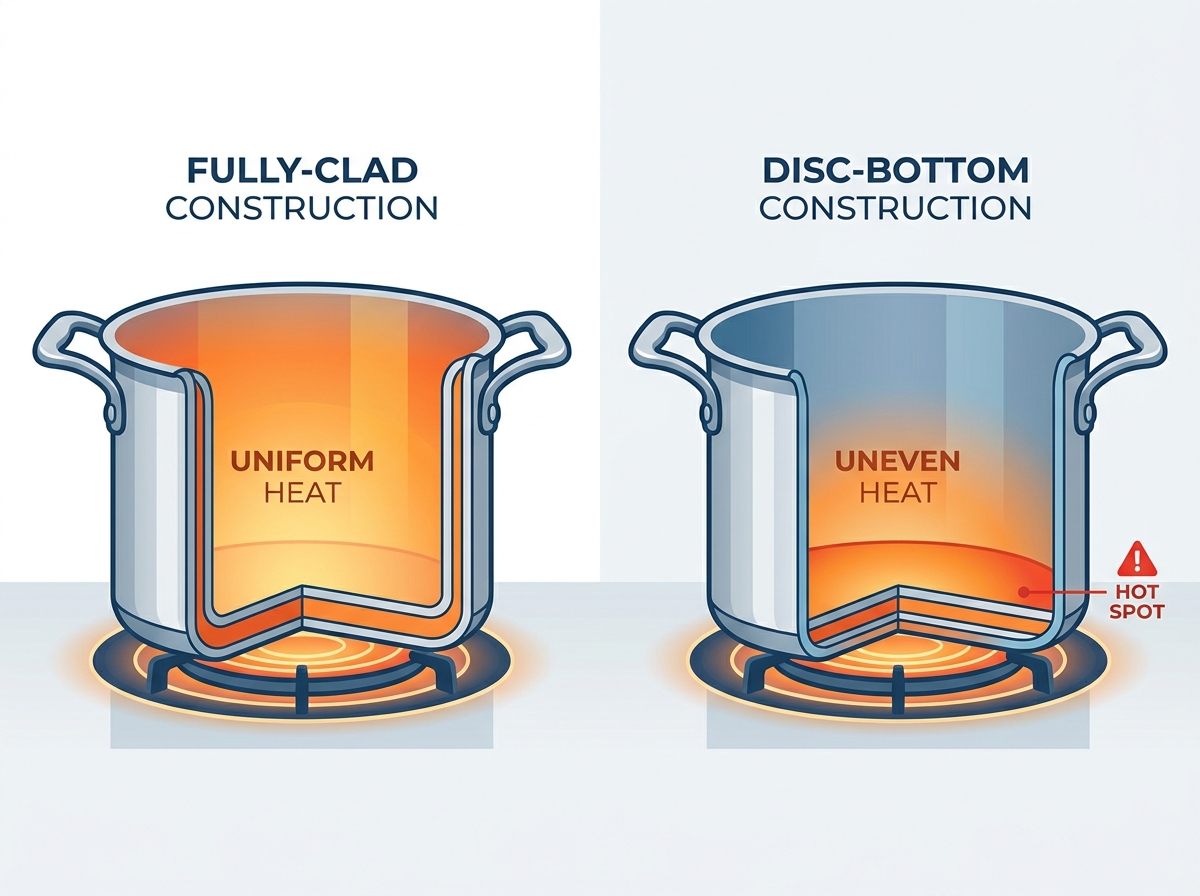
Fully-clad pots feature a conductive core extending from the base all the way up the sidewalls. This continuous architecture ensures even heating across the entire vessel. It prevents sticky food from scorching at the bottom edges. Disc-bottom pans take a cheaper approach. Manufacturers weld a thick puck of aluminum only to the base. The sidewalls remain thin, single-layer steel. This design creates a sharp temperature drop-off where the base meets the wall. Food burns easily in these corners.
You will frequently encounter debates between 3-ply and 5-ply construction. Understanding the diminishing returns helps you choose wisely.
3-Ply Construction: This is the industry standard. It features an aluminum core sandwiched between two steel layers. It offers excellent thermal performance and remains light enough for easy handling.
5-Ply Construction: This adds extra layers, often incorporating additional steel or alternating aluminum sheets. It increases overall durability and retains heat slightly better. However, it significantly increases both weight and price.
Construction Type | Heat Distribution | Weight | Best Application |
|---|---|---|---|
Disc-Bottom | Uneven (hot base, cold walls) | Light | Boiling water, budget setups |
3-Ply Fully Clad | Highly even across entire pan | Moderate | Searing, sauces, daily cooking |
5-Ply Fully Clad | Excellent, holds heat longer | Heavy | Professional heavy-duty use |
Comfort and safety matter during intense cooking sessions. Handle design directly impacts usability. Look for hollow, V-shaped, or bifurcated cast handles. These shapes disperse heat effectively. They remain cool to the touch even when sitting on a roaring stovetop burner for an extended period.
You must also choose between riveted and welded handle attachments. Professional-grade pots favor heavy-duty rivets. Rivets penetrate through the pan wall, offering lifetime security. The handle will never detach unexpectedly. Welded handles create a smooth interior interior surface, making them easier to wipe clean. However, welds can snap under heavy loads or extreme temperature shocks. We strongly recommend rivets for any serious kitchen investment.
Buying a massive, pre-packaged cookware set often leads to cluttered cabinets. You will likely use only three or four pieces regularly. Building a customized core set ensures maximum utility. You must match the capacity of the vessel to your specific culinary tasks.
Every kitchen needs a highly maneuverable saucepan. A Small stainless steel pot excels at rapid tasks and delicate temperature control. You will use this daily for rapid water boiling, oatmeal, and melting butter.
It acts as the perfect vessel for delicate sauce reductions. A heavy base prevents hollandaise or caramel from scorching. When evaluating this size, look for pouring lips along the flared edges. These lips prevent messy drips when transferring liquids. Additionally, check the handle-to-pot weight ratio. Cheap saucepans often feature heavy handles attached to thin bodies. This imbalance causes the empty pan to tip backward off your stove grate.
The mid-size pan bridges the gap between small saucepans and massive cauldrons. We often refer to this as a soup pot or a sautoir, depending on its specific shape. It provides the perfect volume for cooking pasta for two to four people. You can blanch vegetables efficiently without overcrowding the water.
It handles everyday soups, stews, and braises perfectly. The key feature to look for here is a helper handle. This small, U-shaped grip sits opposite the main long handle. A pot holding four quarts of boiling water becomes incredibly heavy. The helper handle ensures safe, balanced lifting when moving the vessel from the stove to the sink.
Volume cooking requires serious capacity. A Large stainless steel pot handles tasks impossible in smaller vessels. You need this specific size for bulk stock making. Extracting flavor from roasted bones requires simmering them in massive amounts of water for hours.
This size also accommodates large batches of pasta, preventing noodles from clumping together. It serves as an essential tool for water-bath canning preparations. When shopping for this size, prioritize a wide footprint. A wider base encourages faster liquid evaporation, which accelerates stock reductions. Furthermore, insist on robust, dual loop-handles. A long stick handle would snap under the massive liquid weight. Thick loop handles allow you to carry the heavy load securely against your body.
When evaluating any Stainless Steel Pot, you must actively inspect it for structural shortcuts. Manufacturers hide cheap construction behind glossy packaging. Learning to spot these red flags saves you from purchasing frustrating, low-performing tools.
Weight serves as a reliable indicator of quality. If a pan feels unusually light in your hands, put it back on the shelf immediately. Lightweight construction indicates a severely deficient aluminum or copper core. Insufficient cladding guarantees hot spots. Your food will burn in the center while remaining raw at the edges. More importantly, thin metal warps easily. Placing a thin pan on an induction burner or a high-BTU gas stove causes the base to buckle. A warped pan spins endlessly on flat cooktops and heats unevenly forever.
Many consumers prefer glass lids because they want to monitor cooking progress visually. However, professionals actively avoid them. Glass lids trap moisture inconsistently. Condensation obscures your view anyway, negating their primary benefit. Crucially, glass remains prone to shattering under high heat or physical impact. You cannot safely transfer a pot with a glass lid into a 500-degree oven for braising. Always opt for tight-fitting steel lids. They trap heat perfectly, never shatter, and handle extreme oven temperatures seamlessly.
Rubberized handle grips seem appealing for comfort and heat protection. Unfortunately, these synthetic materials limit the versatility of your cookware. Plastic and silicone strictly cap the oven-safe temperature threshold of the pan. Usually, they max out around 350 to 400 degrees Fahrenheit. Furthermore, repeated exposure to heat and dishwashers causes these grips to crack, peel, and degrade over time. True professional cookware relies entirely on bare metal geometry for cooling. Solid cast steel handles last indefinitely and transition flawlessly from stovetop to broiler.
Upgrading your cookware requires adjusting your cooking habits. Many new users grow frustrated when their expensive pans seemingly ruin their food. Understanding thermal dynamics and proper maintenance transforms your experience entirely.
Food sticking aggressively represents the most common complaint among new users. They blame the pan, but the fault lies in technique. Cold proteins bond instantly to cold or merely warm steel. You must manipulate the metal using heat.
Proper pre-heating creates a natural non-stick surface through the Leidenfrost effect. Follow these steps:
Place the completely dry pan on medium heat for two to three minutes.
Drop a tiny bead of water into the center.
If the water sizzles and evaporates immediately, the pan remains too cold.
If the water droplet forms a solid bead and dances rapidly across the surface like mercury, the pan is ready.
Wipe out the water, pour in your cooking oil, and immediately add your food. The expanded metal pores prevent sticking.
After a few uses, you might notice a rainbow-colored hue forming on the inside or outside of the pan. Many users panic, assuming they ruined the metal. This rainbow tint is merely a harmless oxidation layer. It occurs when chromium responds to high heat.
It does not affect cooking performance or safety. However, if you prefer a pristine appearance, you can remove it easily. We strongly recommend using a mild abrasive oxalic acid, such as Bar Keepers Friend. Create a paste, rub it gently over the discoloration, and rinse. The factory finish will return instantly.
Proper cleaning extends the lifespan of your investment. Never plunge a piping hot pan directly into cold water. This extreme thermal shock causes permanent warping, even in high-quality fully-clad pans.
Instead, deglaze the pan while it remains moderately warm. Pour a small amount of warm water or broth into the cooling pan. The residual heat will bubble the liquid, loosening stuck-on food bits effortlessly. Scrape the bottom gently using a wooden spoon. Once cooled entirely, wash it using standard dish soap and a non-abrasive sponge. Avoid steel wool unless tackling severe, burnt-on grease, as it scratches the polished exterior.
Selecting reliable cookware fundamentally changes your relationship with your kitchen. Buying the most effective tools requires looking past aesthetic branding and focusing entirely on material science. You must prioritize fully-clad, 3-ply or 5-ply construction paired with genuine 18/10 metallurgical grades. These specifications guarantee superior thermal conductivity, zero flavor reactivity, and lifetime rust resistance. Avoid glass lids, plastic handles, and disc-bottom designs to ensure your investment survives daily culinary abuse.
We highly recommend easing into this transition rather than purchasing a massive set immediately. Start your journey by acquiring a single, highly utilized piece, such as a versatile 3-quart saucepan or a standard 10-inch skillet. Use this single tool to master the Leidenfrost effect, practice precise temperature control, and learn proper cleaning protocols. Once you feel completely comfortable managing the heat dynamics, you can confidently expand your collection to include larger stockpots and specialized sauté pans.
A: No. Induction requires magnetic material to generate heat. The highly corrosion-resistant 18/10 steel used for the cooking surface is mostly non-magnetic. Manufacturers resolve this by fusing a magnetic 18/0 steel layer to the very bottom exterior of the pan. Always check for an "induction compatible" label or test the base yourself using a common refrigerator magnet.
A: You must master the pre-heating process. Heat the dry pan until a water droplet beads up and dances across the surface (the Leidenfrost effect). Wipe the water away, add your oil, and then add your food. Additionally, allow proteins to sear undisturbed. Meat naturally releases from the metal once a proper crust forms.
A: Structurally, yes. A high-quality riveted pan will not break or warp in a dishwasher. However, we advise against it for aesthetic reasons. The harsh, abrasive detergents used in modern dishwashers dull the exterior polish over time. Hand washing using warm soapy water ensures the brilliant luster lasts for decades.
A: Actually, it usually heats up slightly slower. The additional internal layers create more mass for the burner to penetrate. However, 5-ply construction holds its temperature much more evenly once fully heated. This thermal retention makes 5-ply excellent for maintaining steady simmers or preventing temperature drops when adding cold steaks to the pan.