


Views: 0 Author: Site Editor Publish Time: 2026-07-02 Origin: Site


The direct-to-consumer cookware market is heavily saturated with visually striking pots and pans designed specifically for social media aesthetics. Unfortunately, this visual appeal frequently masks subpar culinary performance and short lifespans. Buyers face a high risk of investing in expensive, colorful cookware sets that degrade, chip, or lose their non-stick properties within the first year of regular use. The industry often prioritizes Instagram-friendly designs over material science, thermal conductivity, and long-term durability.
Shifting the focus from aesthetics to functional kitchen performance requires a strict evaluation of construction materials. By benchmarking Stripes Cookware against the broader colorful cookware market, we can establish a reliable framework for evaluating thermal mass, coating adhesion, and structural integrity. We need to look past the marketing hype and examine how these pans actually perform on a hot stove.
The surge in demand for colorful pots and pans has driven manufacturers to rely heavily on sol-gel (ceramic) coatings applied over thin aluminum bodies. This manufacturing shortcut prioritizes vibrant exterior pigments over thermal mass. Sol-gel coatings provide an excellent initial non-stick release, but they are inherently brittle. Under daily thermal expansion and contraction, these silica-based layers develop microscopic fissures. You might notice your eggs sliding perfectly on day one, but by month six, you are scraping residue off the bottom.
This structural reality leads to a rapid degradation cycle for budget-friendly colorful cookware. Within months, the non-stick release diminishes significantly. Proteins tear and delicate fish fillets stick stubbornly to the pan. Simultaneously, the colorful exteriors suffer from scorching and polymerized grease buildup. You cannot scrub this buildup away without damaging the underlying paint, leaving you with a pan that looks old and performs poorly.
Many popular aesthetic cookware brands fall into predictable design traps. Thin-gauge construction is the most prominent failure point. Pans stamped from thin aluminum sheets warp easily when exposed to rapid temperature changes. A warped pan spins on a flat glass cooktop and fails to make proper contact with induction burners, rendering it useless. Another major red flag is the presence of exposed aluminum rims. These untreated edges oxidize in the dishwasher, leading to unsightly corrosion and potential coating delamination at the rim.
Hardware design also reveals the true quality of a pan. Cheap plastic or silicone-accented handles degrade under oven heat. Furthermore, hollow or poorly attached handles trap water during washing. Over time, the internal rivets or screws rust. This causes the handle to loosen, creating a severe safety hazard when carrying hot liquids across the kitchen.
Evaluating modern cookware requires strict, non-negotiable metrics. Thermal mass dictates how well a pan holds heat when cold food is added. Even heat distribution prevents localized hot spots that burn sauces. Coating adhesion determines the lifespan of the cooking surface, while handle ergonomics ensure safe maneuverability. You need a pan that feels balanced in your hand and responds predictably to your stove's burner.
Consumers frequently fall into the set trap. Buying massive pre-packaged colorful sets often results in acquiring redundant or incorrectly sized pieces. Strategically building a kitchen with individual, task-specific pieces yields higher practical utility. A primary daily-driver skillet must prioritize non-stick longevity and even heating. Specialized pieces like stockpots require less advanced interior coatings but demand robust vertical heat distribution to boil water efficiently.
| Cookware Metric | Budget Colorful Brands | Professional Standard |
|---|---|---|
| Thermal Mass | Low (Thin Aluminum) | High (Multi-Clad or Cast Iron) |
| Heat Distribution | Uneven (Hot Spots) | Even (Edge-to-Edge) |
| Handle Attachment | Screwed/Hollow | Riveted/Solid |
| Rim Design | Exposed Aluminum | Sealed/Rolled Stainless |
The internal core of Stripes Cookware utilizes a fully clad multi-ply stainless steel construction. This architecture sandwiches a highly conductive aluminum core between layers of durable stainless steel. This multi-ply setup significantly impacts heat retention and distribution. It pulls heat up the sidewalls rather than isolating it solely at the base. When you cook a thick sauce, the heat wraps around the food, preventing the bottom from scorching while the top remains cold.
This fully clad body construction stands in stark contrast to the cheap impact-bonded or disc-clad bases common in budget colorful cookware. Disc-clad pans glue a thick metal plate only to the bottom of a thin vessel. This creates a sharp temperature drop-off at the edges, leading to severe hot spots and a high risk of base separation or warping over time. The structural baseline of Stripes Cookware aligns with premium industry standards, avoiding the structural shortcuts found in poorly-rated aesthetic brands.
The colorful exterior of Stripes Cookware relies on advanced finishing technology designed to withstand high-heat environments without immediate discoloration. Unlike traditional baked enamel, which is thick and prone to heavy chipping upon impact, or cheap silicone paints that scorch easily, this specific exterior finish balances thermal resilience with scratch resistance. It maintains its visual appeal even after repeated trips to the stove.
However, thermal limitations still exist. While more durable than standard painted ceramic, exposing the exterior to direct, oversized gas flames will eventually cause carbon buildup. The finish resists standard abrasion from grates, but dragging the pan aggressively across rough cast-iron stovetops will compromise the visual integrity faster than bare stainless steel. You must handle it with a degree of care to keep it looking new.
The cooking surface focuses on a balanced friction coefficient, allowing for smooth food release without utilizing legacy forever chemicals. This proprietary non-stick surface requires minimal lipids for cooking. You can fry an egg with just a drop of oil or a small pat of butter, and it will slide right out onto the plate.
The expected degradation timeline heavily depends on daily usage. Under standard conditions, cooking at medium heat and utilizing proper utensils, the surface maintains its integrity significantly longer than basic sol-gel alternatives. However, like all non-stick surfaces, it is a consumable layer. Micro-abrasions will eventually reduce the hydrophobic properties, signaling the natural end of the coating's peak performance cycle. You cannot expect any non-stick pan to last a lifetime.
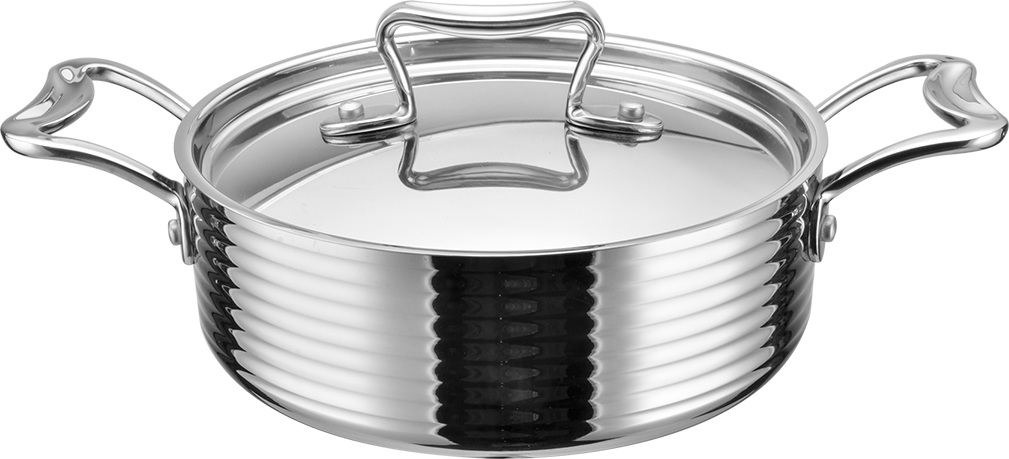
Searing and deglazing test the true limits of any pan. Stripes Cookware handles Maillard reaction tasks admirably due to its multi-clad core. It holds enough thermal mass to sear proteins without immediately dropping in temperature when cold meat hits the surface. While bare stainless steel remains superior for developing fond, this cookware outperforms competitor ceramic pans that struggle to maintain high surface temperatures.
For method-specific performance, heat responsiveness is critical. Delicate tasks like cooking eggs, fish, or reducing sauces require a pan that reacts quickly when the burner is turned down. The aluminum core provides this agility. Temperature control remains consistent across gas, electric, and induction cooktops. It responds to sudden heat changes without the lag associated with heavy cast iron.
| Cooking Task | Stripes Cookware Performance | Standard Ceramic Performance |
|---|---|---|
| Frying Eggs | Excellent (Smooth Release) | Good (Initial), Poor (After 6 months) |
| Searing Steak | Very Good (Holds Heat Well) | Poor (Temperature Drops Quickly) |
| Simmering Sauces | Excellent (Even Sidewall Heat) | Fair (Prone to Bottom Scorching) |
Realistic timelines for interior wear dictate the true value of the pan. Assuming normal use, strictly avoiding metal utensils and abrasive scouring pads, the non-stick degradation occurs gradually. Users can expect peak performance for the first 18 to 24 months. After this period, a slight increase in cooking oils may be necessary to prevent sticking. You will notice the surface becoming slightly less slick over time.
Exterior wear is an unavoidable reality for colorful cookware. Over a 12-to-36-month period, users will likely experience some bottom-scorching and polymerized grease buildup near the rivets. Rim chipping is minimized due to the clad construction, but color fading can occur if the pan is repeatedly subjected to harsh chemical detergents or excessively high oven temperatures. Proper care extends this timeline significantly.
The claim of dishwasher safe must be approached with caution. Harsh dishwasher detergents contain abrasives and high-alkaline chemicals that aggressively attack both colorful exterior finishes and non-stick interiors. Hand washing is mandatory to preserve the physical and aesthetic lifespan of the cookware. A quick wash with warm soapy water and a soft sponge is all it takes.
Handle design directly impacts daily usability. The handles are engineered for efficient heat displacement, remaining cool during standard stovetop use. The weight balance ensures the pan does not tip forward when empty. The ergonomic angle allows for secure maneuverability when the vessel is full of hot liquids, reducing wrist strain during cooking.
Marketing terms like non-toxic are largely unregulated and require strict verification. True safety compliance means verifying the exact chemical exclusions in the manufacturing process. You cannot rely on vague promises printed on a colorful box.
Stripes Cookware adheres to strict compliance standards, verifying the complete absence of PTFE, PFOA, PFAS, lead, and cadmium. This provides a measurable safety advantage over legacy non-stick brands that still rely on fluoropolymers. It ensures no harmful off-gassing occurs even if the pan is accidentally overheated on the stove.
Evaluating the true investment requires looking at the price-to-lifespan ratio. Purchasing a cheaper colorful set every two years due to coating failure or structural warping creates a continuous replacement cycle. Investing in Stripes Cookware interrupts this cycle by providing a multi-clad foundation that physically outlasts budget alternatives. You spend more upfront, but you buy pans far less frequently.
However, this investment must be contrasted with lifetime materials. Bare stainless steel or enameled cast iron will outlast any coated pan by decades. The trade-off lies in convenience. Coated cookware offers immediate ease of use and cleanup, which justifies the finite lifespan for many home chefs who do not want to spend time scrubbing stuck-on food.
Understanding the fine print of the warranty is crucial. The colorful cookware industry frequently relies on strict exclusions to deny claims. You must read the documentation carefully before assuming you are covered for every possible issue.
Common exclusions include normal wear and tear, misuse via high heat, and cosmetic staining. If the non-stick surface degrades or the exterior paint scorches due to user error, the warranty will not cover a replacement. The warranty primarily protects against manufacturing defects, such as rivet failure or base delamination upon arrival.
Specific user profiles will degrade this cookware rapidly. Users who exclusively cook on high heat to sear heavy meats will destroy the coating and scorch the exterior. Individuals who refuse to handwash and rely entirely on dishwashers will strip the finish within months. Finally, cooks who habitually use metal spatulas, forks, or knives directly in the pan should avoid coated cookware entirely and opt for bare stainless steel.
Maximizing the lifespan requires actionable mitigation strategies. Always practice gradual pre-heating. Never place a cold pan on a high flame. Use high-smoke-point fats like avocado or grapeseed oil to prevent sticky polymerized buildup. Strictly utilize silicone or wooden utensils to protect the interior matrix. For storage, always use felt pan protectors or paper towels between nested pans to prevent the metal base of one pan from scratching the interior of another.
A: Yes. The manufacturing process strictly excludes legacy forever chemicals, including PTFE, PFOA, and all PFAS variants. Third-party testing confirms the absence of heavy metals like lead and cadmium in both the interior coating and exterior finish.
A: It performs exceptionally well. The fully clad multi-ply construction includes a magnetic stainless steel exterior base, ensuring strong connectivity with induction elements. Because it is fully clad, it minimizes the buzzing issues often found in cheaper disc-bottom pans.
A: It is highly discouraged. While technically capable of surviving a cycle, harsh dishwasher detergents and high water temperatures will rapidly degrade the non-stick interior and dull the colorful exterior finish. Handwashing is required for longevity.
A: The exterior resists standard chipping better than basic enamel, but it is not impervious to damage. Dragging it across rough grates will cause scratching. Polymerized grease stains can occur if oils drip down the sides and are subjected to high heat.
A: With daily use, proper gradual pre-heating, silicone utensils, and strict handwashing, the peak non-stick performance lasts between 18 and 24 months. After this period, you may notice a gradual decrease in food release efficiency.
A: Yes, the pans are oven-safe. The robust construction allows the main vessels to withstand temperatures up to 500°F (260°C). However, if your set includes glass lids, those are typically restricted to lower temperatures around 350°F to 400°F.