


Views: 0 Author: Site Editor Publish Time: 2026-10-24 Origin: Site


Spring turkey hunting exposes your gear to highly unpredictable elements. You face sudden rainstorms, high morning humidity, and abrasive thick brush. Equipment failure can easily ruin a painfully short season. Rust forms quickly on unprotected metal when moisture levels peak. Buyers face a difficult decision before opening day. You must weigh the upfront cost of an upgrade against familiar options. Is a Stainless Steel Turkey Barrel worth the extra money? Many hunters stick to traditional blued carbon steel. Matte carbon steel offers comfortable familiarity and a lower price point. This guide provides an objective, metallurgy-based breakdown. We field-tested these options extensively in harsh hunting environments. You will learn if the material upgrades justify the investment for your specific needs. We want to help you build a reliable, weatherproof setup. Make the right equipment choice before you step into the woods.
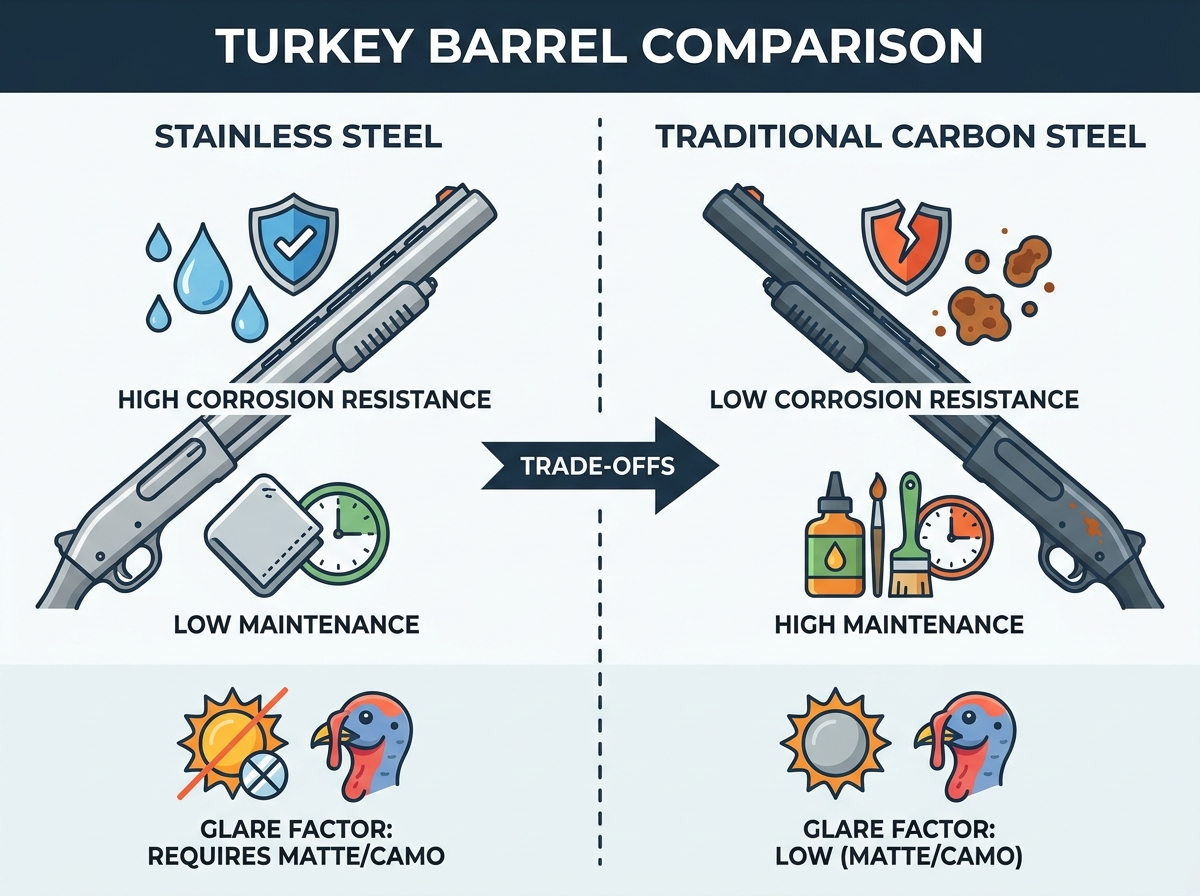
Corrosion Resistance: Stainless steel significantly outlasts traditional carbon steel in wet, humid environments, though it still requires basic maintenance.
The Glare Factor: Raw stainless can spook turkeys; modern stainless turkey barrels require a matte finish, camo dip, or Cerakote to remain concealed.
Pattern Performance: Barrel material does not dictate pattern density—choke constriction and ammunition (like TSS) do.
The Length Debate: Shorter barrels (21”–24”) are optimal for run-and-gun turkey hunting, regardless of the steel used.
Manufacturers build shotgun barrels from different steel alloys. Each alloy serves a distinct purpose in the field. Let us look at the baseline definitions behind these metals. Understanding the metallurgy helps you make a smarter purchase.
Traditional carbon steel serves as the reliable industry standard. Manufacturers use it extensively for its high tensile strength. It remains highly cost-effective for mass production lines. However, it is inherently susceptible to rapid oxidation. It rusts easily without a protective oil barrier. Specialized factory coatings help fight this problem. Unfortunately, moisture always finds weak spots in the finish.
Stainless steel takes a very different chemical approach. Manufacturers often use 416R grade for firearms. It contains high levels of chromium in the mix. This chromium creates a passive oxide layer on the surface. It is highly resistant to surface rust and deep pitting. You pay more because the material is expensive to machine. The steel itself is slightly softer than traditional carbon steel.
Chrome-lined traditional barrels offer a clever hybrid solution. Makers apply a hard chrome lining inside the bore. You get superior internal corrosion resistance against burnt powder. The exterior maintains the cheaper carbon steel profile. This keeps production costs reasonable while protecting the chamber.
Table: Barrel Material Comparison Matrix
Material Type | Corrosion Resistance | Manufacturing Cost | Common Factory Finish |
|---|---|---|---|
Traditional Carbon | Low | Low | Blued or Matte |
Stainless Steel | High | High | Raw, Matte, or Camo |
Chrome-Lined | High (Internal Only) | Medium | Blued or Matte |
We must clarify a common misconception right away. The material is rust-resistant, not entirely rust-proof. It will still oxidize under harsh environmental conditions. Blood, human sweat, and swamp water contain highly corrosive salts. If you store it wet in a humid safe, it will pit. You still need a basic cleaning routine. Never assume you can abandon all maintenance entirely.
Turkey hunting presents a incredibly unique reality. You operate in dense woods and flooded southern swamps. Early morning dew constantly coats everything you touch. These conditions test your gear relentlessly day after day. A shiny gun creates immediate problems in this environment.
Implementation risk is a real threat here. Turkeys possess truly exceptional eyesight. They detect color and UV light easily from a distance. A highly polished Stainless Steel Turkey Barrel will cost you birds. Sunlight reflects off the raw metal like a mirror. You must manage this intense glare actively. Turkeys will spot the flash and run away immediately.
Here are the most common solutions used by veterans:
Factory Matte Finishes: Many manufacturers bead-blast the metal to dull the shine significantly.
DIY Camo Tape: A cheap wrap conceals the barrel effectively during the spring season.
Cerakote Applications: A baked-on ceramic coating offers ultimate stealth and extra protection.
Length matters much more than weight in the turkey woods. Turkey hunters overwhelmingly prefer short barrels. The 21-inch to 24-inch range totally dominates the current market. Shorter tubes offer faster swing dynamics in thick brush. They weigh slightly less for those long ridge hikes. They are much easier to handle from a seated position. When you rest against an oak tree, a 26-inch barrel easily snags on limbs.
You might wonder about weight differences between steel types. Stainless steel does possess a slightly different overall density. However, this weight difference is negligible on a shotgun. Your choice of barrel length impacts handling far more. A short gun maneuverers perfectly inside a tight pop-up blind. Do not let metallurgy dictate your preferred barrel length.
Let us closely evaluate features to outcomes. We must see how materials handle high-pressure environments. Modern turkey loads generate immense chamber pressures upon firing. Your gear must withstand this sudden violent force.
TSS dominates the modern turkey hunting landscape today. It hits incredibly hard at extended ranges. It is also considerably denser and harder than regular steel. Many hunters worry about shooting TSS through their guns. They wonder if they need a specific metal alloy.
You do not need a unique material for TSS. Shooting ultra-hard TSS loads requires specific protective wads. It also requires hardened aftermarket chokes designed for tungsten. The choke takes the full brunt of the tungsten's hardness. This protects the internal barrel threads from severe damage. Both stainless and carbon steel barrels safely handle standard turkey loads. The metal type will not alter your actual pattern density.
Some shooters obsess over long-term bore life. We can compare the bore life of both materials. Chrome lining is physically harder than bare steel. It resists throat erosion slightly better during rapid fire. However, turkey hunting is absolutely not a high-volume shooting sport.
Consider this strictly evidence-oriented claim. The average turkey hunter shoots five to ten heavy loads a year. At this low volume, barrel wear is a complete non-issue. You will never shoot out the bore in your lifetime. The purchase decision should hinge on external corrosion resistance. It should not hinge on internal bore life.
Let us look at the scalability of your upkeep routine. Different materials require vastly different care regimens. You must match your gear to your cleaning habits.
Traditional carbon steel demands strict attention. It requires immediate wipe-downs after wet hunts. If you hunt in the rain, you must oil it that night. Neglect brings a high risk of exterior pitting. Once rust pits the metal, the resale value drops permanently. You cannot easily undo deep oxidation damage.
A modern stainless setup easily forgives lazy maintenance. It can survive a wet weekend trip in your truck. You do not need to panic if you forget the oil rag. It survives without rusting away overnight. This reduces mental overhead for the tired hunter.
Follow this quick upkeep routine for optimal longevity:
Wipe off heavy mud and dirt at the truck.
Run a dry bore snake through the chamber once.
Apply a light coat of synthetic oil at the end of the season.
You will pay more for this extreme convenience. Stainless steel replacement barrels carry a noticeable price premium. Factory setups generally cost 15% to 30% more than traditional models. You trade your upfront cash for long-term peace of mind. Many hunters gladly pay this premium to avoid tedious cleaning.
We must analyze the popular Cerakote alternative. You could buy a cheaper carbon steel barrel instead. You could then apply an aftermarket Cerakote finish. Does this offer a better return on your investment? Cerakote blocks moisture completely from the outside. However, if the coating scratches, the carbon steel underneath will rust. Stainless steel provides inherent protection all the way through the metal. A scratch on stainless will not suddenly bloom into rust.
You have all the objective facts available now. You need to apply them to your specific situation. Use this shortlisting logic to firmly guide your purchase.
Choose a stainless steel setup IF:
You hunt primarily in swamps, coastal areas, or heavy rain. You strongly prefer low-maintenance gear. You hate worrying about rust spots. You intend to keep the gun for several decades. You are completely willing to apply a camo finish to hide the metal glare.
Choose a traditional carbon steel model IF:
You are hunting on a strict budget this season. You strictly hunt in dry, fair-weather conditions. You actually enjoy cleaning your firearms meticulously. Your gun is already fully camo-dipped. A quality factory dip protects the carbon steel anyway.
Take decisive action before the season opens. First, verify your shotgun’s exact receiver compatibility. Not all barrels fit older receiver designs. Second, select your preferred barrel length. We strongly recommend 21 inches for thick brush. Finally, research matching Extra-Full turkey chokes. A great choke matters more than the exterior metal.
Your choice of gear matters immensely when the tom steps into range. A stainless turkey barrel provides unmatched peace of mind against the elements. It laughs off heavy rain and dirty swamp water. However, you must remember the barrel is just the delivery vehicle.
You must optimize the entire shooting system. Pair your chosen barrel with a high-quality aftermarket choke tube. Feed it premium ammunition like Tungsten Super Shot. This precise combination ensures ethical, clean harvests. Evaluate your hunting climate carefully today. Assess your budget honestly. Go build the ultimate turkey hunting gun for your next big adventure.
A: Yes, if it remains highly polished. Turkeys have incredible vision and easily spot unnatural reflections. You must eliminate this shine. Discuss the necessity of matte sandblasting, Cerakote, or camo wrapping. Applying a camouflage vinyl wrap or dull finish keeps you completely concealed in the woods.
A: No. Accuracy and pattern density are determined by the choke tube constriction and the ammunition, not the barrel's exterior metal. The material only impacts durability and maintenance needs. A cheap carbon steel tube can shoot identical patterns if paired with the exact same premium choke and load.
A: The hunting community shares a strong consensus around 21 to 24 inches. This shorter length provides optimal maneuverability in cramped ground blinds. It prevents you from snagging on heavy brush while hiking. A shorter tube also balances much better when resting the gun on your knee.
A: Yes, provided you use a TSS-rated choke tube. The choke takes the brunt of the tungsten's hardness, protecting the barrel threads. Modern steel handles high pressures easily. Always use the proper specialized wads included in TSS ammunition to prevent the ultra-hard pellets from directly scoring the inner bore.