


Views: 0 Author: Site Editor Publish Time: 2026-10-24 Origin: Site


Spring turkey season is notoriously tough on hunting gear. You often find yourself crawling through wet foliage before dawn. You might sit motionless in heavy morning dew for hours. These harsh spring environments expose firearms to extreme moisture and abrasive brush. This constant exposure forces hunters to evaluate equipment durability carefully.
A major conflict arises in the spring woods. You must balance the need for highly weather-resistant equipment against a wild turkey's incredible eyesight. Gobblers possess acute, color-sensitive vision. They spot unnatural reflections instantly. Your gear must withstand the elements without sacrificing absolute stealth.
Our goal is to provide an objective, field-tested evaluation. We will explore the pros and cons of upgrading your primary weapon components. You will learn if the premium cost of a Stainless Steel Turkey Barrel justifies its performance benefits. We break down corrosion resistance, glare liabilities, and optimal camouflage coatings to help you make an informed decision this season.
Stainless steel effectively eliminates surface rust and pitting caused by wet spring hunting conditions.
Unfinished stainless steel creates glare that can instantly spook roosted or approaching gobblers.
The optimal setup pairs a stainless steel core with a matte, Cerakote, or hydro-dipped camouflage finish.
Upgrading to a stainless steel turkey barrel makes the most sense for hunters in high-humidity regions or those using highly abrasive modern ammunition like Tungsten Super Shot (TSS).
Spring turkey hunts rarely happen in comfortable, dry weather. You navigate murky swamps. You endure sudden morning downpours. You drag your shotgun across damp, muddy ground. Standard blued carbon steel suffers tremendously in these exact conditions. It requires daily oiling to prevent surface rust. Neglect a blued shotgun for just one humid evening in hunting camp. Bright orange oxidation will likely appear by sunrise. This rapid degradation threatens the lifespan of your firearm.
Consider the biological reality of wild turkeys. They possess superior daytime optics compared to most game animals. A white-tailed deer might ignore a shiny object. A turkey will not. Turkeys easily process ultraviolet light. They spot unnatural reflections instantly. A sudden flash of metal shining through the timber will send a gobbler running. You lose the element of surprise entirely. Your hunt ends before you even shoulder your weapon.
This biological factor creates a clear baseline comparison. Standard carbon steel demands high maintenance. However, it offers low visibility if given a dull matte finish. Stainless steel requires minimal maintenance. It forgives neglect easily. Conversely, it presents extremely high visibility if left bright and unfinished. You must balance these physical and visual factors carefully when configuring your ultimate turkey gun.
Let us examine the core benefits closely. Superior corrosion resistance stands as the primary advantage. Chromium acts as the secret ingredient in this metal alloy. High chromium levels create a passive oxide layer on the metal surface. This layer actively prevents oxidation during multi-day backcountry hunts. You might lack proper cleaning gear in a remote hunting camp. A Stainless Steel Turkey Barrel easily forgives this temporary neglect. You return home without finding deep rust pits ruining your investment.
Modern ammunition changes ballistics entirely. Tungsten Super Shot (TSS) dominates the current turkey hunting market. TSS pellets are incredibly dense and hard. They score much higher on the hardness scale than traditional lead or bismuth. These heavy payloads cause significant friction inside your shotgun bore. Stainless steel provides a highly resilient bore surface. It withstands the intense pressures of high-density payloads better over time. You experience less internal wear after repeated patterning sessions.
Hunters also save valuable time between hunts. Moisture wipes away easily with a dry cloth. You avoid the immediate fear of deep pitting. This reduced maintenance downtime keeps you focused on strategy. You plan your next morning setup instead of frantically field-stripping your weapon in the dark. Your gear serves you, rather than you serving your gear.
Finally, consider thermal stability. This metal alloy dissipates heat efficiently. You notice minor advantages during prolonged patterning sessions. The barrel stays slightly cooler at the shooting range. A cooler barrel prevents heat mirage from distorting your sight picture. It ensures consistent shot placement while you test different choke tube constrictions.
Table 1: Material Performance Characteristics
Performance Metric | Standard Carbon Steel | Stainless Steel Alloy |
|---|---|---|
Corrosion Resistance | Low (Requires constant oiling) | High (Resists heavy moisture) |
Bore Hardness vs. TSS | Moderate | Excellent |
Maintenance Required | Daily wipedowns needed | Minimal field maintenance |
Visual Profile (Uncoated) | Matte black or blued (Low glare) | Bright silver (High glare) |
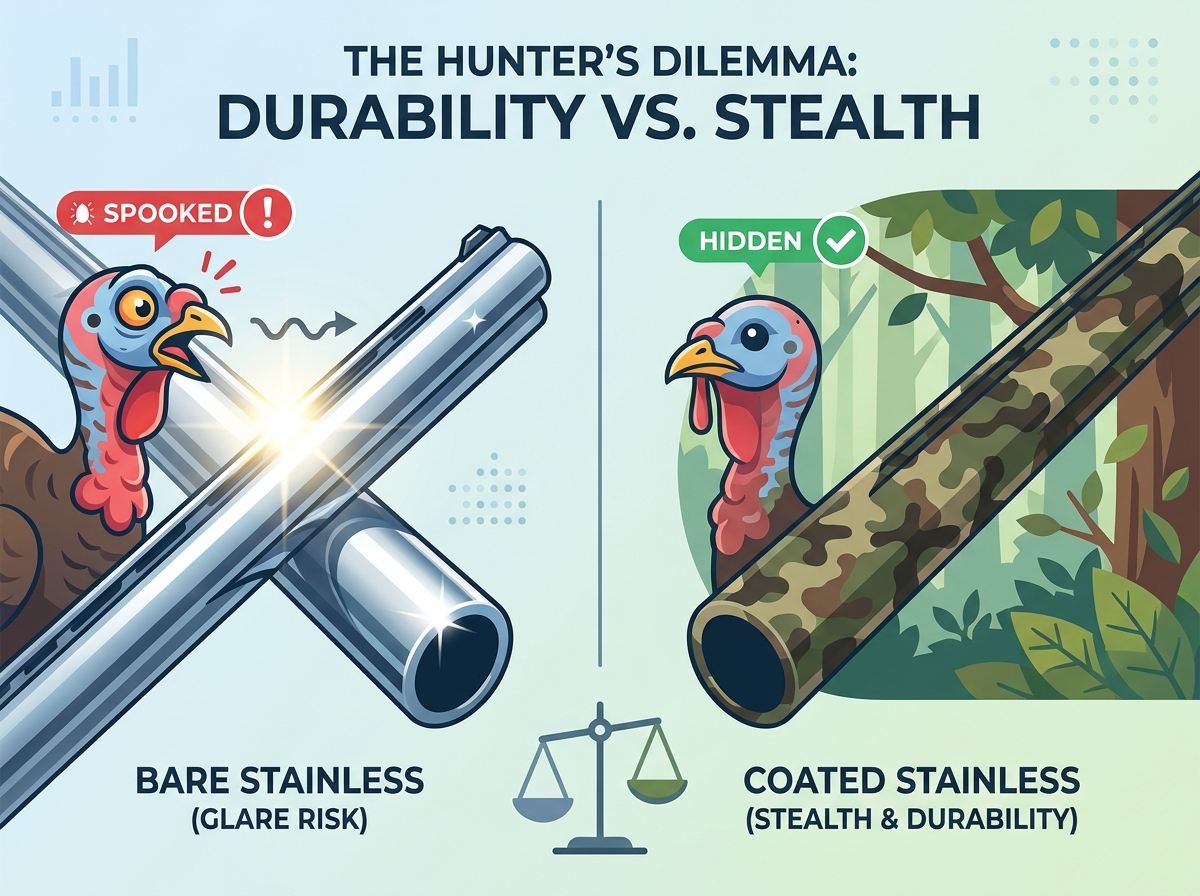
No material is perfect. We must address the most critical flaws directly. The glare liability is massive. A bare metal exterior acts like a mirror in the woods. Sunlight bounces off the bright surface easily. This violates the absolute core rule of turkey hunting concealment. You cannot hide a shiny tube from a suspicious tom. Even on cloudy days, the contrast between bright metal and dark timber draws unwanted attention. Bringing an uncoated shiny gun to the turkey woods guarantees failure.
Weight variances also matter significantly. Stainless steel alloys are slightly denser. They weigh more than typical carbon steel alloys. This extra density alters the overall balance of your firearm. A specialized run-and-gun turkey shotgun should feel exceptionally light. Added frontal weight makes quick aiming slightly sluggish. It pulls the muzzle down when you try to hold steady on a slow-approaching bird. Hunters trekking several miles a day will feel every extra ounce.
Pricing and availability create another major hurdle. Factory replacements remain incredibly rare. Aftermarket options represent a niche product category. You often need to place custom orders through specialized gunsmiths. Manufacturers typically command a 20-40% markup over standard factory replacements. You pay a clear premium for extreme corrosion resistance. Finding the exact length and chamber size for your specific shotgun model often requires lengthy internet searches and backorders.
You can solve the glare problem completely. Successful implementation almost always involves an aftermarket or factory coating. This "best of both worlds" approach works perfectly. You get deep rust protection underneath a stealthy, dull exterior. You never have to compromise between durability and concealment.
Cerakote leads the modern firearms industry. It is a highly advanced, thin-film ceramic coating. Gunsmiths bake Cerakote directly onto the prepared metal. It proves highly durable against abrasive brush and thorny vines. It eliminates glare completely. Most importantly, it maintains the underlying rust protection perfectly. A scratch in the Cerakote simply reveals rust-proof metal underneath, rather than vulnerable carbon steel.
Hydro-dipping offers another incredibly popular choice. This water-transfer printing process applies complex camouflage patterns directly to the firearm. It provides ultimate visual concealment in the spring timber. You can match the pattern to your local foliage exactly. However, the hydro-dip film can chip or peel over time. Constant rubbing against hunting vests wears the corners thin. Fortunately, the resilient metal underneath prevents rust at the chip site.
Matte bead blasting provides a cheaper, purely mechanical alternative. Gunsmiths blast the surface using fine abrasive media. It turns the shiny metal into a dull, flat gray. This process reduces light reflection significantly. It does not entirely eliminate glare, though. Direct sunlight can still cause a dull sheen. Bead blasting works best for hunters seeking a budget-friendly compromise.
Cerakote: Best overall durability and glare reduction.
Hydro-Dipping: Best absolute concealment and pattern matching.
Bead Blasting: Best budget option for basic glare reduction.
Should you upgrade your current turkey shotgun? We built a simple evaluation framework. Use these criteria to guide your upcoming equipment decisions.
Climate and Geography: Evaluate your typical hunting environment honestly. We strongly recommend upgrading for hunters operating in the deep South. Coastal regions and the Pacific Northwest also demand better rust protection. Constant humidity, salt air, and daily rain destroy standard carbon steel quickly. If you hunt the arid Southwest, the upgrade remains less critical.
Hunting Style: Assess your daily physical movement. Carbon steel works fine for casual, fair-weather hunters. Strict blind hunters stay dry under a roof. We highly recommend the upgrade for aggressive run-and-gun hunters. You constantly cross creeks, push through wet brush, and lay in damp fields. Your gun takes a beating every single morning.
Ammunition Use: Factor in your primary shell choice. High-volume shooters using Tungsten Super Shot benefit greatly. The harder bore surface resists mechanical wear and scoring. Lead or Bismuth users see less mechanical benefit. If you shoot expensive modern tungsten loads exclusively, protect your bore accordingly.
Take the next logical step. You can source an upgrade in two primary ways. Buy a dedicated aftermarket unit from trusted brands like Carlson's or Hastings. Ensure you order the correct chamber length. Alternatively, purchase a brand-new factory shotgun featuring a coated, weather-resistant barrel system out of the box. Many manufacturers now offer "Waterfowl" or "Turkey" specific models utilizing protected stainless components.
We reach a clear final verdict. Carrying a bare metal shotgun into the spring woods represents a major tactical error. However, a coated weather-resistant setup acts as the ultimate investment for serious turkey hunters. Serious woodsmen adopt a buy-once-cry-once mentality. You secure lifelong durability alongside supreme concealment.
Take actionable steps today before the season opens. Always prioritize choke tube compatibility. Ensure your specific chokes match the new thread patterns perfectly. Commit to rigorous pattern testing regardless of the material you choose. A durable gun means nothing if it shoots poorly. Confidence in your pellet pattern ultimately dictates your success in the spring woods.
A: No. Material alone does not change your pellet pattern. Internal bore dynamics dictate pellet spread. Forcing cones, bore diameter, and choke constriction influence the pattern directly. The raw exterior metal plays no role in grouping shots. Focus on matching the right choke tube to your specific ammunition brand instead.
A: Yes, but you need a specific choke. You must use a TSS-rated, hardened choke tube. Tungsten pellets are incredibly dense and hard. A standard choke will swell or stick. The hardened choke tube protects the delicate barrel threads from intense internal pressures and mechanical friction.
A: Yes, it certainly can. Stainless is highly resistant, not completely rust-proof. Camo tape traps moisture and condensation directly against the metal. Leaving tape on for several months causes surface discoloration and minor pitting. Always remove tape after the season ends. Clean the surface thoroughly to maintain metal integrity.
A: Clean it gently. Use mild gun solvents and soft microfiber cloths. Avoid harsh abrasive brushes on the exterior. Wire brushes will strip external non-reflective coatings like Cerakote or hydro-dip. Treat the inside bore normally, but protect the outside finish from heavy solvents and sharp scraping tools.