


Views: 0 Author: Site Editor Publish Time: 2026-10-26 Origin: Site


You are actively comparing turkey frying hardware for upcoming holidays, catering gigs, or large-scale outdoor cookouts. The pressure is on. You want a perfectly crispy, juicy bird without causing a backyard disaster. Balancing upfront costs against long-term durability, safety, and consistent performance poses a real challenge. Cheap aluminum pots often warp and pit over time. They create severe safety hazards when filled with boiling oil.
Transitioning from these flimsy pots to a commercial-grade Stainless Steel Turkey Barrel requires understanding critical specifications. You must evaluate steel gauges, capacity limits, and accessory quality before buying. In this comprehensive guide, we will break down the structural benefits of premium metals. We will also explore precise sizing rules and current pricing tiers. This information will empower you to choose the safest, most reliable frying vessel for your next major event.
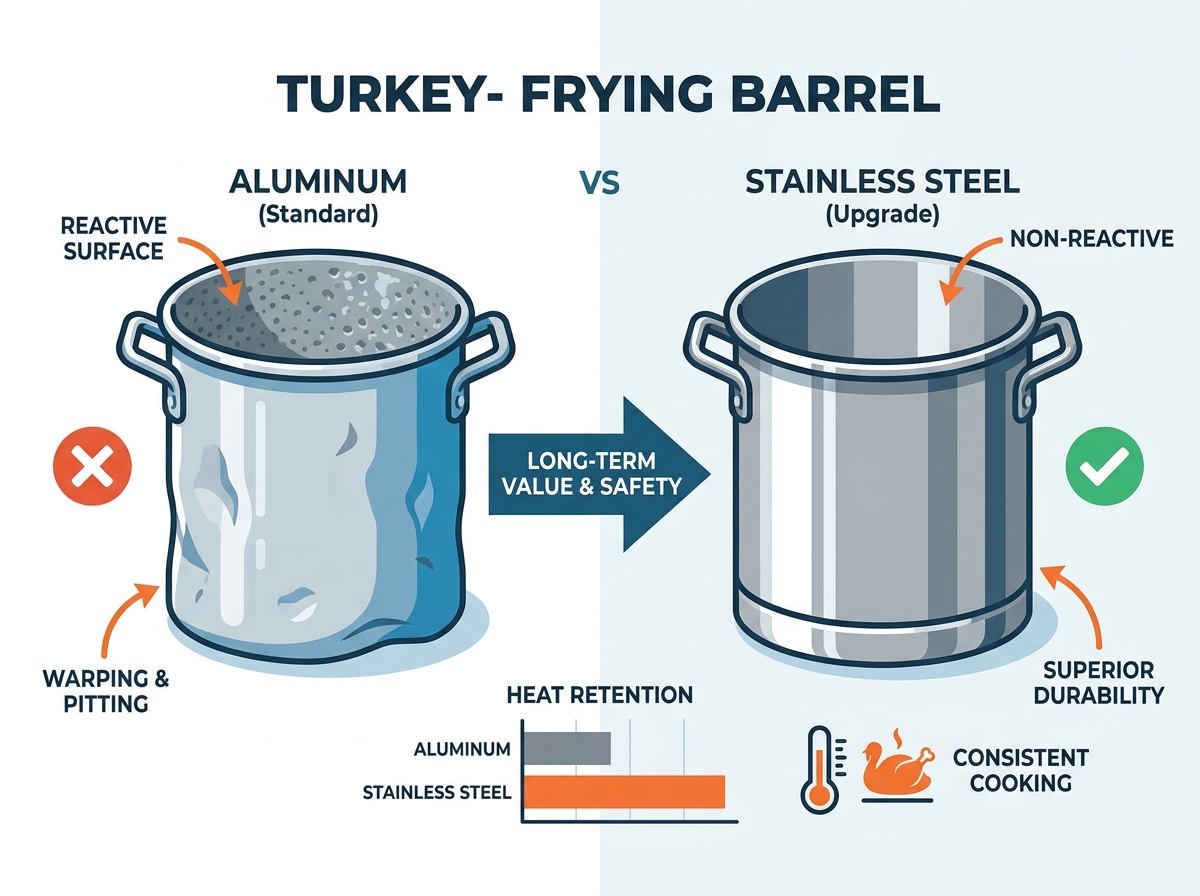
Material Superiority: Stainless steel eliminates the pitting, warping, and reactive flavor issues common with standard aluminum fryers.
Capacity Thresholds: A standard 30-32 quart barrel safely handles a 15-18 lb turkey; 40-44 quart oversized options are required for 20+ lb poultry or double-batching.
Cost vs. Value: Expect to invest between $100 and $250+. The premium pays for heavy-gauge metal, welded handles, and comprehensive accessory kits (poultry racks, thermometers, injectors).
Safety Imperative: Weight distribution, secure lifting hooks, and accurate temperature monitoring are non-negotiable evaluation criteria.
Frying a massive bird involves high heat, heavy oil, and significant safety considerations. Upgrading your equipment mitigates these risks while improving your culinary results.
Many beginners start out using basic aluminum pots. These thin vessels easily dent during transport or storage. Over repeated cycles of high-heat exposure, structural degradation occurs. Stainless steel entirely changes this dynamic. It resists denting and maintains its structural integrity for decades. Your initial investment pays off quickly because you rarely need to replace the hardware. You avoid the physical breakdown seen in cheaper alternatives.
Flavor integrity matters deeply to professional caterers and home chefs alike. Aluminum reacts aggressively to acidic ingredients. If you use citrus-based marinades or vinegar brines, aluminum can leach metallic tastes into your food. Stainless steel provides a highly stable, non-reactive cooking surface. It preserves the pure flavor of your spices and meat. You can also use harsh cleaning chemicals safely. They will not strip or degrade the metal interior.
Heat management dictates the success of a deep fry. Dropping a cold, 15-pound bird into hot oil instantly lowers the temperature. Aluminum heats up quickly, but it also loses heat rapidly. Stainless steel possesses greater thermal mass. It requires a slightly longer initial heating period. However, it provides far superior temperature recovery once you submerge the meat. This steady heat retention ensures a crispy skin and prevents greasy, oil-logged meat.
We must offer an honest assessment regarding maintenance. Stainless steel pots weigh significantly more. This makes them slightly harder to maneuver in a standard kitchen sink. However, the cleaning process itself is far less delicate. You can utilize aggressive scrubbing pads and heavy-duty degreasers. Burnt-on oil responds well to overnight soaking. You will not scratch or ruin the pot using standard abrasive cleaners.
Do not purchase a pot based on capacity alone. Several underlying structural features determine how safely and effectively the equipment performs.
Thickness matters immensely for heat distribution and safety. Manufacturers measure this using metal gauge numbers. Lower numbers indicate thicker steel. You should look for 20-gauge steel at minimum. Many premium brands utilize 18/10 stainless steel. This specific alloy includes chromium and nickel. It offers unmatched corrosion resistance and brilliant shine.
Handle construction is equally vital. A full pot easily exceeds 50 pounds. Stamped or spot-welded handles often snap under this intense stress. You must select models featuring heavy-duty, riveted handles. Seamlessly welded handles also provide excellent security. They ensure you can lift the massive weight safely.
Choosing the right size prevents dangerous overflow scenarios. You must decide between the standard 30-quart and the oversized 44-quart options.
30-Quart Barrels: These handle birds weighing up to 18 pounds. They require less oil and heat up faster.
44-Quart Barrels: These accommodate poultry exceeding 20 pounds. They offer extra headroom to prevent dangerous splashing.
Calculating the safe fill line prevents boil-over disasters. Boiling over represents the most common, and most dangerous, implementation failure. You must test your exact displacement volume before ever touching cooking oil.
A bare pot is useless without the right tools. Evaluate the bundled accessories carefully.
Poultry Rack/Stand: The base must sit completely flat. It needs to match the barrel diameter perfectly.
Lifting Hook: Assess the grip design. It must offer enough leverage to lift a heavy bird straight up.
Thermometer: You need a 12-inch probe minimum. It must reach the center of the oil without touching the bottom. Calibration accuracy is non-negotiable.
Lid Design: Vented lids allow steam to escape while reducing hot oil splatter. Solid lids often trap dangerous amounts of moisture.
Understanding market tiers helps you align your budget with your actual cooking needs. Prices fluctuate based on metal thickness and included accessories.
Pricing Tier Comparison Chart
Market Category | Price Range | Ideal Capacity | Best For |
|---|---|---|---|
Entry-Level / Value | $80 - $130 | 30 Quart | Occasional holiday use |
Mid-Range / Prosumer | $130 - $180 | 30 to 40 Quart | Annual tailgaters and enthusiasts |
Commercial / Heavy-Duty | $180 - $250+ | 44+ Quart | High-frequency catering and huge birds |
These kits target the occasional holiday fryer. If you only cook one bird a year, this tier makes sense. The trade-offs are noticeable, however. They utilize thinner steel gauges. The accessories consist of basic stamped metals. You generally only find 30-quart capacities in this range. They get the job done but require careful handling.
Annual enthusiasts and frequent tailgaters should shop in this category. These models offer reliable performance and thicker walls. You receive better heat distribution and fewer hot spots. Manufacturers usually bundle valuable extras here. You will find high-quality seasoning injectors and multi-piece carving sets. Many also include reinforced perforated baskets. These baskets allow the pot to double as a seafood boiler.
High-frequency users and caterers need this premium tier. It perfectly handles extremely large birds up to 25 pounds. You unlock 44-quart or larger capacities. Many feature tri-ply bases. A tri-ply base sandwiches an aluminum core between stainless steel layers. This guarantees perfectly even heating if you use the pot on a flat indoor commercial range. You also get professional-grade, seamlessly welded lifting hooks.
Even the best hardware fails if you implement it poorly. Outdoor frying introduces severe fire risks. You must follow strict safety protocols.
Never assume your new pot fits your old burner. You must verify the base diameter. A heavy Stainless Steel Turkey Barrel must sit perfectly flush on your outdoor propane stand. Even a slight wobble can cause a catastrophic spill. Ensure the stand’s support rings wrap adequately around the pot's bottom edge.
Do not underestimate the physical demands of this process. A 44-quart model filled with oil and a 20-pound bird easily exceeds 70 pounds. You must assess the structural support of your burner legs. Furthermore, evaluate your own physical capability. Lifting a heavy, boiling-hot object straight up requires significant upper body strength. Always wear heat-resistant gloves.
Oil displacement causes most frying fires. You cannot simply guess the oil level. You must follow strict guidelines using the water-displacement test.
Place your raw, unwrapped meat onto the lifting rack.
Set the rack inside the empty barrel.
Fill the barrel with water until it barely covers the meat.
Remove the meat and rack carefully.
Mark the remaining water line. This is your exact oil requirement.
Dry the pot completely before adding any oil.
Location dictates safety. Best practices require placing the setup far away from combustible structures. Industry standards mandate a minimum clearance of 10 feet from homes, garages, and trees. Never operate the fryer on a wooden deck. Factor in the wider footprint of oversized models. Ensure children and pets cannot access the cooking zone.
Narrowing down your choices requires matching features to your specific lifestyle. Use this logical framework to finalize your purchase.
If maximizing budget: Prioritize the metal gauge over bundled accessories. A solid, thick-walled pot protects your safety. You can always buy better thermometers or marinade injectors separately later. Do not compromise on the core vessel.
If cooking for crowds (20+ lbs): Filter exclusively for 40-44 quart oversized models. Smaller pots will spill over. Ensure these large models include heavily reinforced lifting mechanisms. The sheer weight demands welded handles.
If multi-use is required: Look for packages that include a full-size perforated strainer basket. This accessory transforms your fryer into a versatile tool. It allows the pot to double as a massive seafood boiler. You can also use it as a highly effective homebrewing kettle.
A stainless steel turkey barrel represents a long-term culinary investment. It mitigates dangerous safety risks and drastically elevates your cooking consistency. By upgrading from flimsy aluminum, you eliminate metallic flavors and structural warping. You gain unmatched durability, excellent heat recovery, and a versatile vessel for diverse cooking needs.
Your next step requires immediate action. Go outside and measure your current burner stand diameter. Determine the maximum bird size you plan to cook this year. Once you have those two data points, you can confidently check current pricing and secure the perfect model for your upcoming feast.
A: Most domestic indoor stoves cannot support the massive weight or generate the required BTUs. A fully loaded barrel easily exceeds 60 pounds, which can crack glass cooktops. Additionally, indoor deep-frying of this scale presents severe grease-fire hazards. Only use them indoors on reinforced, commercial-grade ranges with dedicated heavy-duty ventilation systems.
A: Never rely on a flat volume estimate. You must use the water displacement method. Place your poultry in the empty pot, cover it with water, and remove the bird. Mark the waterline left behind. This exact measurement represents your required oil volume, preventing dangerous boil-over accidents.
A: Stainless steel is objectively better for safety and longevity. Aluminum heats up faster and costs less upfront. However, it dents easily, warps under prolonged heat, and reacts poorly to acidic marinades. Stainless steel provides unmatched durability, safer heavy-lifting support, and a non-reactive cooking surface.
A: Avoid harsh wire brushes. Instead, fill the barrel with water, add a cup of baking soda, and bring it to a boil. Let it simmer, then allow it to cool and soak overnight. For tough exterior stains, apply Bar Keepers Friend with a non-abrasive sponge to restore the shine.