


Views: 0 Author: Site Editor Publish Time: 2026-10-29 Origin: Site


In a professional kitchen, a sauce pot acts as a precision tool. It is never just a simple cooking vessel. Burning a delicate wine reduction costs you valuable time. Breaking a hollandaise due to random hot spots wastes expensive ingredients. Thin disk-bottom pots frequently warp on commercial gas ranges. They cause uneven heating profiles across the pan base. Reactive metals also pose a massive problem for chefs. They easily alter the flavor and color of highly acidic sauces.
The right Stainless Steel Sauce Pot provides uncompromised durability. It ensures neutral reactivity and exact thermal control. This guide breaks down essential cookware engineering for you. We explore vital evaluation criteria and top equipment categories. Culinary professionals can use these insights effectively. You will finally make a definitive purchasing decision for your demanding hot line.
Construction Over Brand: Fully clad (3-ply or 5-ply) construction with an aluminum or copper core is non-negotiable for rapid heat response and eliminating hot spots.
The Non-Reactive Advantage: 18/10 stainless steel ensures highly acidic ingredients (like tomatoes or wine reductions) do not take on a metallic taste or cause pitting.
Design Details Matter: Features like flared pouring rims, flush rivets, and hollow ergonomic handles separate standard cookware from high-efficiency professional tools.
Maintenance Reality: Stainless steel requires specific thermal management (heating before adding oil) and maintenance (using oxalic acid cleansers) to maintain its baseline performance.
A solid stainless steel foundation transforms professional culinary operations. We see immediate benefits in daily thermal dynamics. A conductive core must extend up the exterior sidewalls. Manufacturers usually employ heavy-gauge aluminum or copper for this core. This inner metal layer prevents scorching at the base perimeter. Scorching remains a critical failure point in busy kitchens. Thick sauces and delicate custards suffer most from perimeter burns. Fully clad layers distribute heat evenly across the entire surface. They eliminate aggressive hot spots completely during long simmers.
Non-reactivity drastically improves your overall yield quality. We can contrast stainless metal against cast iron or bare aluminum. Bare aluminum leaches directly into your food over time. It famously turns white sauces gray and bitter. Premium 18/10 stainless steel preserves ingredient integrity perfectly. Highly acidic reductions maintain their vibrant visual color. They keep their exact intended flavor profile. You avoid any unwanted metallic taste in your delicate tomato sauces.
Premium pots demand a higher upfront financial commitment from operators. However, they deliver a near-infinite lifespan on the line. Durable steel resists warping under extreme temperature shifts. You can deglaze a hot pan continuously without fear. The flat base maintains structural integrity over decades of heavy service. High-quality steel easily withstands aggressive whisking and metal utensils. You rarely need to replace a fully clad pot.
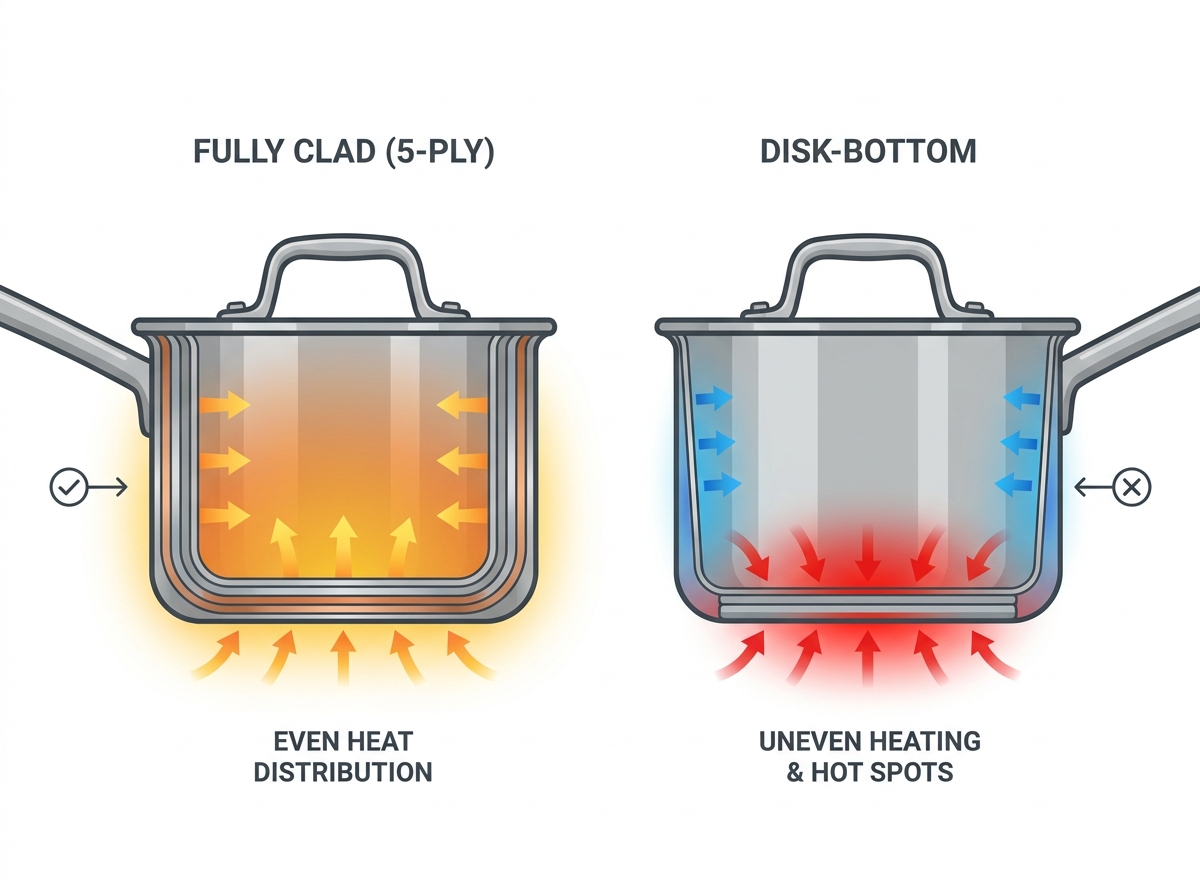
Evaluate cladding architecture carefully before stocking your kitchen. You must weigh 3-ply against 5-ply construction options. We often hit a definitive point of diminishing returns. A 3-ply aluminum core proves sufficient for general liquid volume. It handles rapid boiling and vegetable blanching effortlessly. A 5-ply or copper core becomes strictly necessary elsewhere. High-precision temperature control demands thicker conductive cores. Delicate emulsions rely entirely on rapid heat adjustments to prevent breaking.
Handle ergonomics dictate your overall line speed. Securely riveted handles are absolutely essential for commercial durability. They must stay cool during high-tempo service hours. Rivetless designs offer distinct operational trade-offs for chefs. Welded handles improve interior pan hygiene immensely. Food debris cannot trap around smooth welded joints. Yet, riveted handles provide superior structural sheer strength. They survive aggressive tossing and heavy impacts inside industrial sinks.
Examine lip design and evaporation control closely. Rolled rims guarantee smooth and dripless pouring. Flared edges keep your plating station impeccably clean. Tight-fitting lids provide precise moisture retention during long cooking cycles. Slow braises require trapped steam to tenderize proteins. Grain cooking demands minimal evaporation for perfect hydration. Poor lid geometry leads to dry, ruined batches of rice or quinoa.
Consider your specific heat source compatibility requirements. Induction readiness requires a highly magnetic stainless exterior. You can test the base using a simple refrigerator magnet. High-BTU gas stoves present unique performance constraints. Flame cupping can melt handle bases if positioned poorly. Keep handles positioned safely away from aggressive burner perimeters. Thick bases prevent flame cupping from reaching the delicate sidewalls.
Cladding Architecture Comparison
Feature | 3-Ply Aluminum Core | 5-Ply / Copper Core |
|---|---|---|
Heat Responsiveness | Moderate to fast | Extremely rapid |
Weight | Lighter, reduces wrist fatigue | Heavier, substantial feel |
Best Culinary Use | Boiling, blanching, large batch soups | Emulsions, caramels, delicate custards |
Cost Profile | Accessible for bulk kitchen outfitting | Premium pricing per unit |
Chefs categorize pots based on highly specialized menu demands. We can break down the top equipment profiles logically. Each category serves a distinct purpose on the hot line. You should build your inventory using these defined groups.
Best for Precision & Delicate Sauces (Copper-Core / 5-Ply): Focus on models offering hyper-responsive temperature changes. These pots are ideal for complex emulsions and caramels. They handle delicate custards flawlessly. The evaluation focus here centers on heat responsiveness. However, you must accept a noticeable weight penalty. Heavy pans cause fatigue during long shifts.
Best Heavy-Duty Option for Commercial Volume (3-Ply Armor): Focus on ultimate durability for daily abuse. Look for ergonomic lifting hooks on large capacities. Helper handles become mandatory for pots over three quarts. These models offer aggressive price-to-lifespan ratios. The evaluation focus prioritizes structural integrity. You must also consider the pan's balance when completely full of hot liquid.
Best Hybrid/Conical Saucier Design: Contrast the standard straight-walled pot with a curved-bottom saucier. The curved base proves far superior for constant whisking. It features no trapped corners where flour or egg yolks can stick. The evaluation focus highlights pure whisking efficiency. We also measure the exposed surface area designed for rapid liquid reduction.
Thermal shock destroys high-quality cookware rapidly. Warn your dishwashers against plunging hot metal into cold water. Even premium multi-clad metals delaminate under severe thermal stress. The pan base will warp if structurally abused this way. A warped pan spins endlessly on flat cooking surfaces. It loses critical contact with induction or electric burners. You must let pans cool gradually before soaking them.
Gas stove discoloration happens frequently in busy kitchens. Constant exposure to high gas flames causes blue oxidation. A rainbow heat tint appears quickly on the exterior walls. Recommend strong solutions like Bar Keepers Friend for daily cleaning. The oxalic acid removes heat tint effortlessly. It maintains strict aesthetic compliance in open-concept kitchens. Clean pots project professional hygiene standards to your dining room.
Improper salting causes permanent micro-pitting in stainless steel. Detail the harsh chemical reaction of undissolved salt. Cold stainless steel cannot resist this corrosive attack. You must provide a strict operational fix for your staff. Only add salt to actively boiling liquids. Rapidly boiling water dissolves salt crystals instantly. Dissolved salt prevents permanent micro-pitting entirely. Your interior pan surface remains perfectly smooth for years.
Capacity mapping provides a reliable framework for choosing sizes. You should assign specific volumes to specific station tasks. Avoid guessing what capacities your line cooks actually need.
1.5–2 Quart Capacities: Perfect for small batch reductions. Ideal for clarifying or browning butter. Excellent for single-portion pasta tossing.
3–4 Quart Capacities: Built for cooking thick soups. Mandatory for boiling grains like rice or farro. Ideal for high-volume sauce holding during peak dinner rushes.
5+ Quart Capacities: Reserved for large batch preparations. Use these for building foundational stocks. Perfect for blanching heavy volumes of green vegetables.
We strongly argue against buying pre-packaged cookware sets. Sets contain useless filler pieces designed for home consumers. Advise your purchasing manager to buy specific open-stock capacities. Menu requirements must dictate your kitchen inventory entirely. Station layout also determines optimal pan dimensions. A tight sauté station cannot accommodate bulky, oversized handles.
Standardization offers massive operational benefits. Uniform pan brands improve overall line efficiency drastically. Cooks predict heat times accurately when using identical metals. Universal lid swapping speeds up service noticeably. Consistent handle angles reduce physical wrist fatigue over time. A standardized kitchen operates with predictable, reliable rhythm.
An investment in a fully clad stainless steel pot guarantees results. It represents a direct investment in your process consistency. High-quality cookware functions as a completely reliable daily partner. We strongly advise an immediate menu audit for your kitchen. Review your most demanding sauces and delicate reductions today.
You must determine your exact thermal management requirements. Some stations desperately need the hyper-responsiveness of 5-ply copper. Other prep stations require the utilitarian durability of aluminum. A commercial 3-ply core serves high-volume prep perfectly. Standardize your inventory based purely on these operational findings. Train your staff on proper thermal handling and daily maintenance. You will eliminate unnecessary ingredient waste entirely and speed up plating.
A: Food sticks due to the Leidenfrost effect. Cold proteins bond directly to microscopic pores in the metal. You must pre-heat the pan thoroughly before cooking. Add oil only after the steel gets hot. The heat expands the metal and creates a perfectly smooth surface. This thermal technique prevents sticking completely and ensures easy cleaning.
A: No, it is not always better. A 5-ply pan adds significant weight and cost. Heavy pans cause wrist fatigue during busy service shifts. A 3-ply pan handles basic liquid boiling perfectly well. You only need 5-ply construction for highly sensitive reductions requiring rapid thermal shifts.
A: No, not all pots work on induction burners. The exterior base requires ferritic 18/0 stainless steel. This specific grade contains necessary magnetic properties. You can test your current pan very easily. Place a magnet against the bottom exterior. If it sticks firmly, it is induction compatible.
A: We strongly advocate for metal lids in professional environments. Glass lids present serious shatter risks on busy hot lines. They also have much lower oven safety temperature limits. Metal lids offer superior durability during high-speed commercial dishwashing cycles. They easily survive accidental drops onto hard tile floors.