


Views: 0 Author: Site Editor Publish Time: 2026-10-28 Origin: Site


Distinguishing between a $30 standard pot and a $200 premium pan often frustrates everyday buyers. They look completely identical resting on the retail store shelf. Yet, their performance drastically differs once they hit the stove. Sauce pots act as the true workhorses of any bustling kitchen. Poor heat distribution inevitably causes scorched sauces, uneven reduction, and permanently warped bases. Choosing the right vessel becomes a vital matter of daily culinary efficiency, far beyond simple kitchen aesthetics.
We provide an evidence-based, highly objective look at cookware construction. You will learn about core materials, daily performance capabilities, and vital construction mechanics. We offer a completely transparent analysis. You will finally understand whether those premium price tags genuinely equate to tangible, real-world cooking benefits.
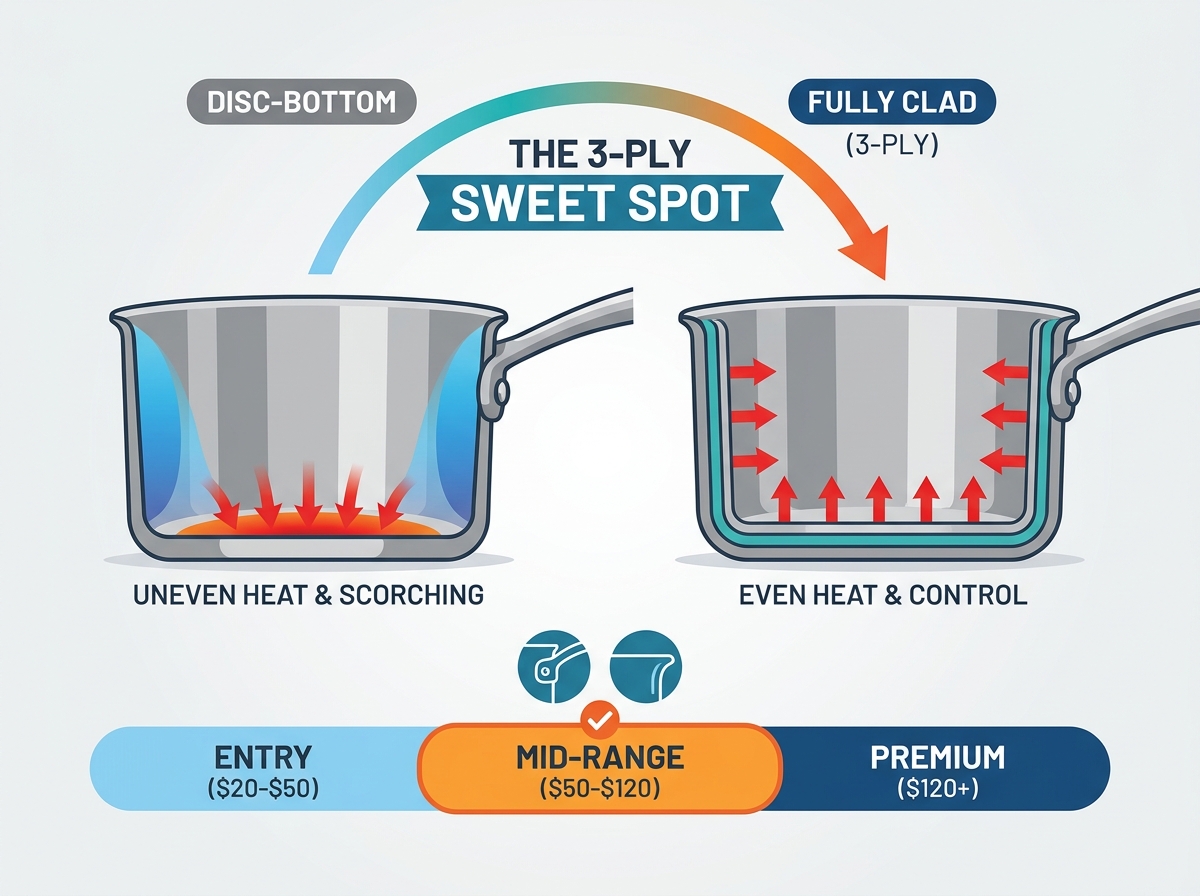
Cladding Over Material Alone: Fully clad construction (aluminum or copper core extending up the sides) outperforms cheaper disc-bottom designs by eliminating hot spots.
The 3-Ply Sweet Spot: For most home and professional applications, 3-ply stainless steel offers the optimal balance of heat responsiveness, weight, and price.
Diminishing Returns in Pricing: Mid-range pots ($50–$120) deliver 90% of the performance of premium heritage brands ($150+); the highest price tiers largely pay for brand legacy, minor ergonomic upgrades, and ultra-high ply counts (5-ply/7-ply).
Feature-to-Value Indicators: Rolled lips for drip-free pouring, riveted stainless handles, and induction compatibility are non-negotiable features for a high-ROI purchase.
Manufacturers build cookware bases in two vastly different ways. Disc-bottom pots feature a thick plate of aluminum welded only to the base. This mechanical design only heats the bottom surface. Flames hitting the sides create distinct hot spots. Food easily scorches near the edges. Fully clad construction solves this flaw completely. Factories bond an aluminum or copper core between stainless steel sheets before shaping the pan. This core extends seamlessly up the entire sidewall. Fully clad vessels conduct heat evenly across every inch.
Consider this practical decision lens when shopping for your cookware:
Rule out disc-bottom models for delicate tasks. They easily ruin hollandaise, pastry creams, or caramel.
Accept disc-bottom pots only for basic water boiling tasks.
Always prioritize fully clad models for consistent, predictable simmering.
Cookware ply count refers to the number of bonded metal layers. You must compare these internal layers carefully. Aluminum cores heat rapidly and remain relatively lightweight. Copper cores offer ultimate precision and thermal control. However, copper significantly increases both cost and physical weight.
We must apply a skeptical note regarding higher ply counts. Brands heavily market 5-ply and 7-ply constructions as superior upgrades. These extra layers often just add significant weight and dramatically inflate the price. They offer only marginal gains in thermal retention over high-quality 3-ply alternatives. For everyday cooking, massive ply counts rarely translate to better meals.
Handle geometry dictates your comfort and safety. Analyze the handle shape where it meets the pot body. The best designs feature V-shaped or Y-shaped splits near the attachment point. This open geometry creates an air gap. The gap effectively slows heat transfer, keeping the handle cool during stovetop use.
You also need to evaluate fastener types. Manufacturers use two primary methods to attach handles:
Riveted Fasteners: Extremely durable. They never loosen. However, they require diligent cleaning to remove food buildup around the rivet heads.
Welded Fasteners: Much easier to clean. They offer a completely smooth interior surface. They do carry a slightly higher failure rate over decades of heavy use.
Small design touches drastically change the user experience. Compare flared or rolled rims against straight edges. Flared rims break liquid surface tension effortlessly. They allow you to pour hot liquids without frustrating drips running down the exterior. Straight edges almost always create a messy pour.
Lid materials present another clear choice. Tempered glass lids offer excellent monitoring convenience. You can watch water boil without releasing trapped heat. Solid stainless steel lids provide maximum durability. They easily withstand accidental drops and boast much higher oven-safe temperature ratings.
Price Tier | Cost Range | Primary Construction | Ideal Usage Scenario |
|---|---|---|---|
Entry-Level / Budget | $20 – $50 | Disc-bottom, 18/8 steel | Basic water boiling, college dorms |
Mid-Range / High-Value | $50 – $120 | 3-Ply fully clad, 18/10 steel | Daily cooking, complex sauces |
Premium / Heritage | $120 – $300+ | 5-Ply / Copper core | Professional kitchens, heirloom gifts |
Budget options flood the market with appealing price tags. These pots typically feature disc-bottom designs. They use thinner 18/8 stainless steel for the main body. Manufacturers pair them with simple glass lids and basic spot-welded handles to cut production costs.
These cheap features introduce significant kitchen risks. Thinner materials show a high susceptibility to warping under sudden temperature changes. We call this thermal shock. Plunging a hot budget pan into cold water permanently bends the base. Additionally, the disc bottoms remain highly prone to localized hot spots, making sauce reduction frustrating.
This tier represents the sweet spot for nearly all cooks. When you evaluate a Stainless Steel Sauce Pot in this bracket, expect major upgrades. These pots feature fully clad 3-ply construction. They utilize a solid 18/10 stainless cooking surface for superior rust resistance. They incorporate induction-ready magnetic steel exteriors and securely riveted handles.
The performance outcome clearly justifies the price jump. You gain highly reliable thermal conductivity. Food cooks evenly from edge to edge. This price category easily hits the ceiling of practical utility for 95% of home chefs. Spending more rarely changes how your food actually tastes.
Heritage brands command premium prices through impeccable craftsmanship. These models feature advanced 5-ply or highly responsive copper-core construction. They showcase proprietary handle ergonomics and absolutely flawless finishing. Buyers also receive robust lifetime warranties. Many brands boast strict regional manufacturing protocols, producing their pots exclusively in the USA, France, or Italy.
We must offer a reality check here. Acknowledge what this premium truly funds. The massive price jump pays for extreme longevity. It covers tighter factory quality control and established brand prestige. It does not provide a proportional 3x increase in your food quality. You pay for kitchen heritage.
Marketing campaigns often praise heavy cookware. We warn against over-indexing on these "heavy-duty" claims. Extra weight sounds durable but quickly becomes a daily nuisance. You must easily lift your sauce pot with one hand. You will frequently pour hot liquids while vigorously whisking with your other hand. A massive 7-ply pan makes this simple motion strenuous and dangerous. Prioritize a comfortable weight balance over maximum thickness.
Modern kitchens require adaptable tools. You must always verify magnetic bases for induction stovetop compatibility. Even if you cook on gas today, you might upgrade to induction tomorrow. Check the manufacturer specifications carefully. Furthermore, discuss maximum oven-safe temperatures. High thermal limits prove crucial for finishing complex dishes. You often need to slide a pot into a hot oven to keep components warm before serving.
We need to set clear expectations regarding daily cleanup. Stainless steel is absolutely not non-stick. You must learn proper temperature control. Over time, you will inevitably face polymerized oil stains. You will notice a rainbow-colored discoloration on the base, known as heat tint. Hard water will leave chalky calcium deposits inside the pot.
These minor blemishes are perfectly normal. They do not indicate a defective product. Routine maintenance easily restores the finish. A specialized cleaner like Barkeepers Friend effortlessly strips away oil buildup and discoloration. White vinegar quickly dissolves stubborn calcium deposits. Regular upkeep ensures your investment shines for decades.
Your cooking habits dictate your purchasing needs. Analyze your weekly routines carefully. Focus your budget based on your primary kitchen tasks.
If you have a liquids or boiling focus, save your money. An entry-level or mid-range model is completely sufficient for boiling pasta or heating broth. Water regulates the temperature perfectly. However, if you have a reductions or sauce focus, you must invest appropriately. Delicate gravies and thick purees demand a mid-range or premium fully clad pan. The continuous metal core effectively prevents frustrating edge-burning.
Size matters tremendously in daily workflow. Choosing the wrong volume leads to messy boil-overs or wasted energy. Stick to these established benchmarks:
1.5 to 2-Quart: This compact size is best for melting butter quickly. It works perfectly for warming milk or reducing small-batch glazes. It takes up minimal space on a crowded stove.
3 to 4-Quart: We consider this the universal standard. It comfortably handles boiling pasta for two people. It excels at simmering hearty soups or creating large-batch tomato sauces.
Smart buyers look past the initial retail tag. Contrast the hidden costs over a decade. Buying a thin, budget-tier pan seems thrifty today. However, you will likely warp that pan within a few years. Replacing a $30 pot every three years wastes money and adds to landfills.
Instead, try investing $80 to $100 once. A reliable 3-ply fully clad model withstands decades of daily abuse. It survives accidental drops and rapid temperature changes. The upfront cost stings briefly, but the long-term utility pays endless dividends. A quality vessel stays in your kitchen permanently.
Selecting the perfect cookware requires separating clever marketing from mechanical reality. Base your next purchase on cladding architecture first. Always demand fully clad construction for predictable, even heating. Evaluate the ply count second, keeping in mind the sweet spot of standard 3-ply designs. Consider brand prestige last, as it rarely influences how your meals taste.
Focus strictly on functional ergonomics like rolled pouring rims and secure riveted handles. Avoid overpaying for extreme weight or microscopic aesthetic details. We strongly recommend pointing your budget toward a fully clad, 3-ply stainless steel pot in the versatile 3-quart range. This specification stands as the safest, most reliable investment for absolutely any home kitchen.
A: Food sticking rarely indicates poor cookware quality. It usually points to improper heat management. You must preheat the dry pan properly before adding cooking oil. When heated correctly, moisture in the food creates a barrier of steam. We call this the Leidenfrost effect. This natural steam layer prevents proteins from bonding directly to the metal surface.
A: Yes, 18/10 generally performs better. These numbers represent the chromium and nickel percentages inside the steel alloy. Both feature 18% chromium. However, 18/10 contains 10% nickel, while 18/8 contains only 8%. The higher nickel content in 18/10 provides superior resistance against rust and acidic corrosion over decades of use.
A: Pragmatically, no. Basic liquids regulate pan temperature naturally and prevent edge scorching. A cheap disc-bottom pan boils water perfectly fine. However, we warn about future limitations. If your culinary habits ever evolve toward making delicate sauces or thick purees, a disc-bottom pan will scorch your ingredients instantly.
A: Most manufacturers confidently claim their pots are dishwasher safe. However, realistic longevity tells a different story. The harsh, abrasive detergents used in modern dishwashers slowly dull the beautiful exterior finish. More importantly, these chemicals eventually degrade the exposed aluminum core edges along the rim. We strongly recommend simple hand washing.