


Views: 0 Author: Site Editor Publish Time: 2026-10-29 Origin: Site


A Stainless Steel Sauce Pot serves as the undisputed daily workhorse of any modern kitchen. Unfortunately, making a hasty purchasing choice often leads to scorched sauces, warped pan bases, and frustrating daily cleanup routines. Unlike typical non-stick pans inherently designed to be disposable over time, high-quality stainless steel represents a true buy-it-for-life investment. This extreme durability makes your selection process highly critical, as you will rely on this specific tool for decades of meal preparation. Our objective is to strip away flashy cookware marketing jargon entirely. We provide a highly technical, evidence-based framework for evaluating these essential kitchen tools from the ground up. You will learn exactly how to analyze core materials and shortlist the perfect vessel tailored to your specific cooking volume and primary heat source.
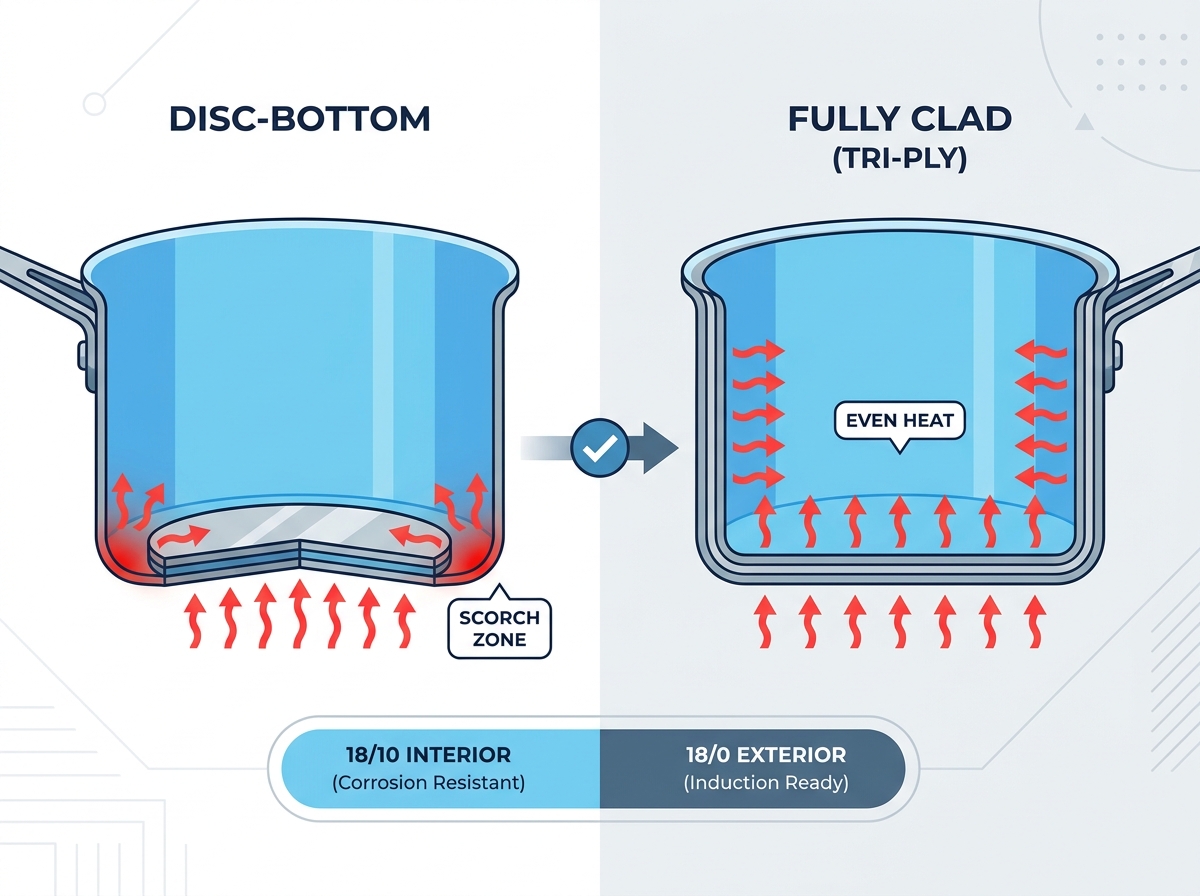
Prioritize Full Cladding: Look for fully clad (tri-ply or higher) construction extending up the sidewalls, rather than cheap disc-bottom designs, to prevent edge-scorching.
Verify Steel Grades: Ensure 18/10 stainless steel for the cooking surface (corrosion resistance) and 18/0 for the exterior base (induction compatibility).
Assess Ergonomics: Prioritize hollow, cast stainless steel handles with secure riveting over welded joints for thermal control and longevity.
Match Size to Reality: A 2-quart or 3-quart capacity covers 80% of daily culinary tasks; avoid oversized pots for small-volume reductions.
Stainless steel boasts incredible durability and resistance to scratching. However, it is inherently poor at conducting heat on its own. If you place a single layer of steel over a gas flame, it will heat unevenly and create aggressive hot spots. To solve this baseline problem, manufacturers bond highly conductive metals inside the steel layers. This internal core material completely dictates everyday cooking performance.
You must understand the distinct difference between disc-bottom and fully clad construction before spending your money.
Disc-Bottom: These pots feature an aluminum core glued only to the flat bottom base. The sidewalls remain thin, single-ply steel. They are highly prone to creating hot spots directly at the bottom corners. Sauces frequently catch and burn in these corners because whisking cannot dissipate the localized heat fast enough. We strongly advise rejecting these designs for delicate sauce work.
Fully Clad: A thick aluminum or copper core extends completely across the bottom and continuously up the sides to the rim. Heat travels evenly throughout the entire vessel. You require this architecture for temperature-sensitive culinary tasks. Making hollandaise, melting caramel, or executing rapid liquid reductions demands this uniform thermal environment.
Marketing departments often push higher ply counts as inherently superior. You should evaluate these claims carefully.
3-Ply (Tri-Ply): This remains the absolute industry standard. It features an aluminum core sandwiched between two steel layers. Tri-ply offers the best overall balance of rapid heat responsiveness and manageable physical weight.
5-Ply: Manufacturers add extra layers of aluminum or proprietary steel alloys. This upgrade only proves valuable if the additional layers tangibly increase the total core thickness. Frequently, 5-ply just adds thin, heavy sheets of steel without improving thermal conductivity. It adds significant weight to your wrist. You do not strictly need 5-ply construction for liquid-heavy boiling and simmering tasks.
Construction Type | Heat Distribution | Weight Profile | Best Culinary Application |
|---|---|---|---|
Disc-Bottom | Uneven (Base only) | Lightweight | Basic water boiling |
3-Ply (Tri-Ply) | Highly Uniform | Moderate / Balanced | Sauces, grains, everyday use |
5-Ply | Highly Uniform (Retains heat longer) | Heavy | Searing meats, slow simmers |
Not all stainless steel shares the same chemical composition. The specific metallurgical grades determine how your cookware handles rust, pitting, and magnetic fields. High-end brands deliberately use different steel alloys on the inside versus the outside of the pot to maximize functional performance.
Your food directly touches the interior lining. Therefore, this surface must contain an 18/10 ratio of chromium to nickel. The 18% chromium content prevents overarching rust. The 10% nickel content provides a polished luster and maximum resistance to chemical pitting. Highly acidic ingredients like crushed tomatoes, red wine, and citrus juice will degrade lower-quality steel over time. Salty boiling water can also cause microscopic pitting if the nickel content drops too low. Always verify this 18/10 specification before purchasing.
The exterior base touching your stove requires a completely different approach. Manufacturers use 18/0 stainless steel here. The intentional omission of nickel makes this specific steel layer magnetic. This ferromagnetism stands as a critical evaluation criterion today. If you currently use an induction cooktop, or plan to migrate to one eventually, your cookware must possess a magnetic base. Induction technology relies entirely on electromagnetic fields to generate friction and heat inside the metal itself. Without 18/0 steel on the exterior, the pot simply will not heat up.
You can verify these material claims through simple visual inspection. Reputable manufacturers permanently stamp their steel grades directly into the exterior base. Turn the piece over and look for "18/10" engraved near the center. You should also look for an "Induction Ready" stamp or a small coil symbol. If a brand hides these specifications, they usually use inferior materials to cut production costs.
Technical specifications matter immensely, but daily interaction determines how much you actually enjoy using your kitchen tools. A poorly designed handle or an awkward rim turns routine cooking into an annoying chore. Ergonomics play a massive role in safety, especially when you maneuver heavy, boiling liquids across a busy kitchen.
Handle attachment methods dictate both structural longevity and cleaning convenience. Riveted handles offer absolute structural permanence. The thick metal pins penetrate the sidewall, ensuring the handle will never detach. Conversely, welded handles offer easier interior cleaning because no rivet heads protrude into the cooking space. However, welds carry a higher risk of snapping under heavy liquid loads after years of thermal expansion and contraction. We strongly recommend riveted joints for lasting safety.
Heat retention also dictates handle comfort. Solid metal handles transfer heat rapidly, forcing you to use a towel. Look for handles featuring V-shaped splits near the pot body. This split reduces the physical pathway for heat to travel. Additionally, hollow cast designs disperse heat aggressively. They keep your grip comfortably cool even during extended simmering sessions on a gas burner.
Rim design represents a non-negotiable functional element. Flared or rolled rims curve slightly outward at the top edge. This curvature breaks the surface tension of pouring liquids. It allows you to pour hot stocks or sauces smoothly without the liquid dripping down the exterior sidewall and creating a mess on your counter. Straight-cut rims inevitably cause aggressive dripping and should be avoided.
Many premium models now feature laser-etched internal measurements. These clearly marked quart and liter lines reduce your reliance on separate measuring tools. When you need to reduce a stock by exactly half, you can easily monitor the progress visually. This small design choice dramatically streamlines liquid reductions and daily meal prep.
Lid selection often polarizes home cooks, but professional kitchens strictly favor one material over the other. Your choice impacts heat retention, durability, and oven safety.
Solid metal covers represent the undisputed professional standard for severe kitchen environments.
Pros: They are entirely unbreakable. You can drop them on a hard tile floor without consequence. They remain oven-safe to exceptionally high temperatures, usually exceeding 500°F. Furthermore, heavy metal traps heat effectively, bouncing thermal energy back into the liquid for rapid boiling.
Cons: You cannot visually monitor the food. You must lift the cover to check boiling progress, which instantly releases trapped heat and steam.
Glass lids appeal heavily to beginners who prefer constant visual confirmation of their cooking progress.
Pros: Glass allows uninterrupted visual monitoring. You can watch a simmer or a boil without disturbing the internal thermal environment.
Cons: They remain highly prone to shattering if dropped or subjected to rapid thermal shock (like moving from a hot stove to a cold sink). Glass usually carries much lower oven-safe temperature limits, commonly capping out between 350°F and 400°F. Finally, the metal rim crevices securing the glass often trap moisture and breed bacteria over time.
Recommendation: We advise choosing solid stainless steel. It guarantees lifetime longevity and offers superior durability for aggressive daily use.
Purchasing an incorrectly sized vessel frustrates cooks more than any other mistake. If you use a massive vessel for a tiny task, the liquid evaporates too quickly and scorches. If you crowd a small vessel, it boils over. Understanding exact capacity applications prevents these daily headaches.
These miniature versions serve highly specific, small-scale tasks. They work beautifully for melting half a cup of butter, warming a splash of milk for coffee, or making a single serving of morning oatmeal. However, they are far too small for general dinner utility. You will outgrow this size rapidly if cooking for more than one person.
This represents the essential starter size for most households. It perfectly handles cooking grains for two people, reducing savory pan sauces, or quickly reheating lunch soups. The 2-quart size balances a compact footprint with enough depth to prevent minor splattering. It is highly manageable and easy to wash in a crowded sink.
You absolutely require this volume range for standard family meals. A 3-quart model comfortably handles boiling dry pasta for two to three people. It holds large batches of mashed potatoes and provides enough space for blanching green vegetables in heavily salted water. The taller sidewalls trap heat efficiently for larger volumes.
Evaluation Tip: If your budget or storage space only allows for buying one single piece, a 3-quart model provides the absolute best versatility. It handles family-sized side dishes without claiming an excessive physical footprint on your stovetop.
Selecting the right equipment drastically improves your daily culinary efficiency. When evaluating a Stainless Steel Sauce Pot, you must ruthlessly filter your options. Instantly reject any models lacking fully clad construction. From your remaining candidates, demand an 18/10 interior steel lining, smoothly rolled pouring rims, and an ergonomic handle design tailored to your grip.
Your immediate next steps involve checking your current stove configuration. Confirm whether you need induction compatibility. Next, assess the physical sizes of the pots you grab most frequently. Finally, select a tri-ply 2-quart or 3-quart model from a respected manufacturer offering a lifetime warranty against warping. By following this precise framework, you guarantee a lifetime of reliable, scorch-free cooking.
A: No. While 5-ply construction offers slightly better heat retention, high-quality 3-ply heats up noticeably faster. Tri-ply provides excellent, even heating for boiling and simmering liquids, and it usually arrives at a much better price-to-weight ratio. The extra weight of 5-ply provides diminishing returns for liquid-based cooking.
A: You must preheat the vessel thoroughly before adding any oil. Wait for the oil to shimmer slightly, then add your ingredients. Allow proteins to sear and release naturally before moving them. For liquid-based sauces, sticking rarely poses an issue if you stir properly and maintain controlled, moderate heat.
A: Those rainbow marks, known as "heat tint," represent a completely harmless cosmetic reaction. High temperatures cause the natural chromium oxide protective layer on the steel to thicken. You can easily remove these stains by wiping the interior with a dash of white vinegar or a specialized cleanser like Bar Keepers Friend.
A: Not necessarily. While a thicker core improves heat distribution, a vessel that becomes too heavy makes pouring boiling liquids incredibly dangerous. It also makes straining pasta unnecessarily difficult. You should always aim to balance adequate core thickness with a manageable physical weight you can lift comfortably with one hand.